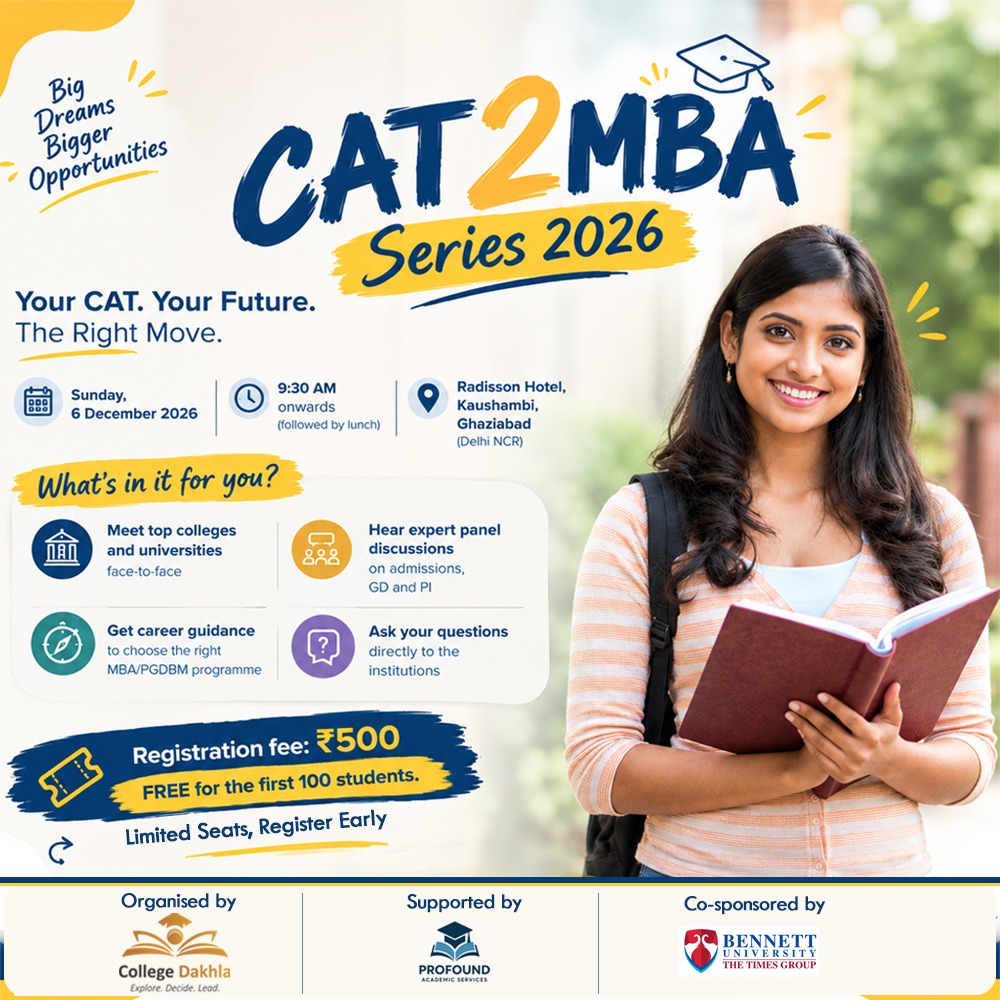
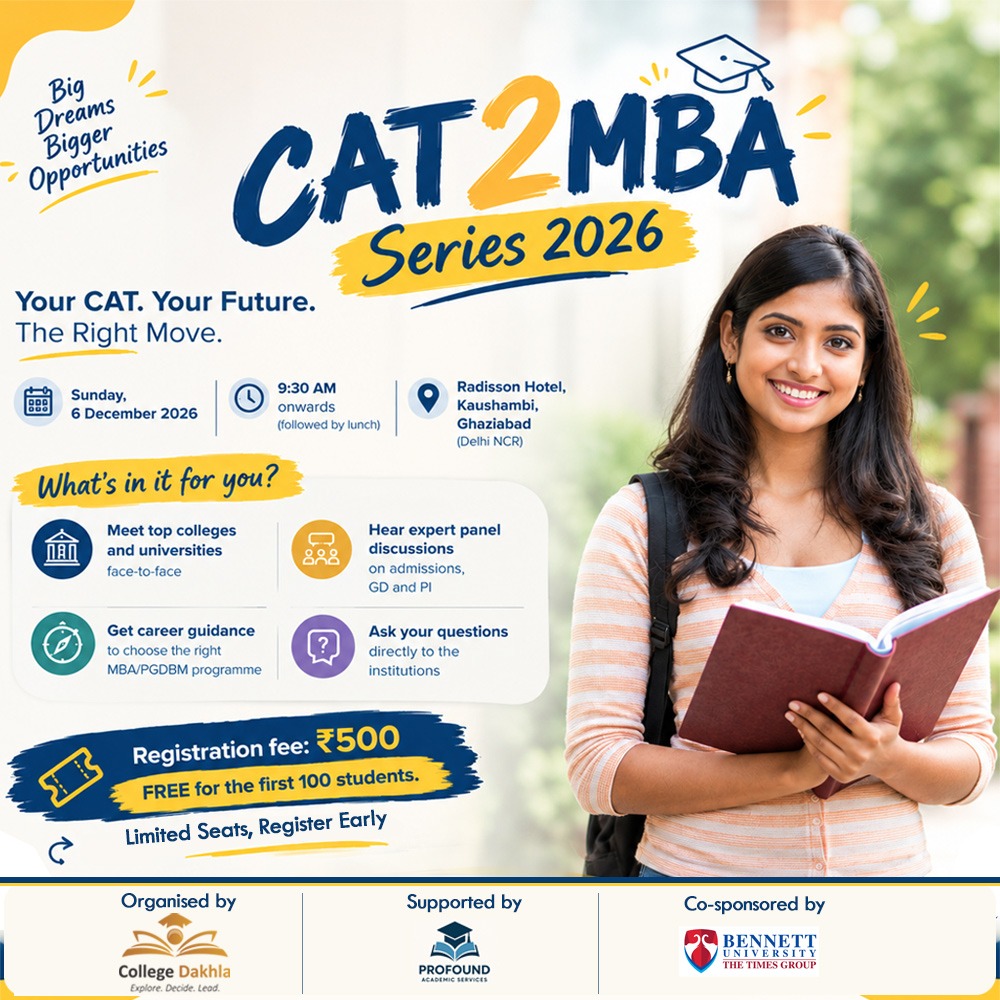
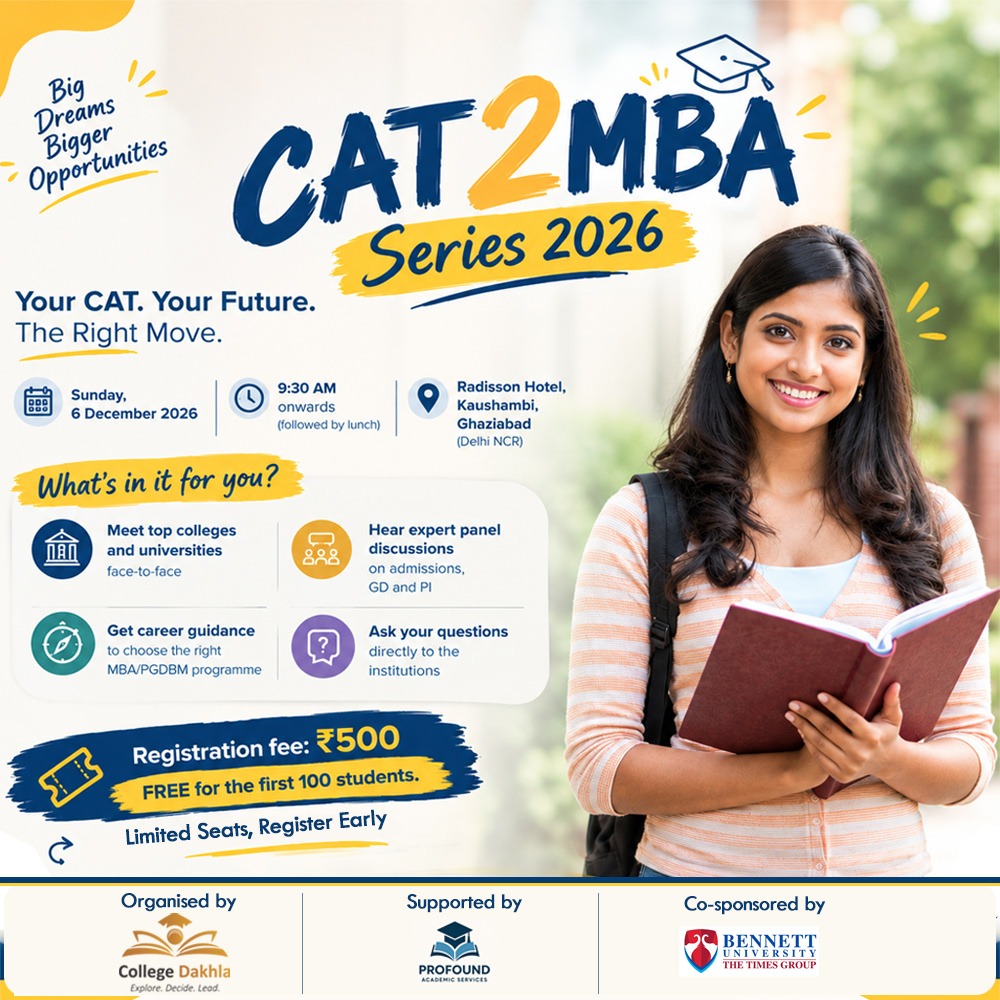
CAT 2026 last 15 days preparation plan for MBA aspirants
November 11, 2026

Delhi, Delhi | College | Estd 1997
(Reviews)

Info
Courses & Fees
Admission
CutOff
Placement
Reviews
Vivekananda Institute of Professional Studies – Technical Campus (VIPS-TC) is a private higher education institution located in Pitampura, Delhi. It is affiliated with Guru Gobind Singh Indraprastha University (GGSIPU) and offers professional programmes across law, technology, management, computer applications, commerce, journalism and mass communication, and liberal arts. The institute focuses on career-oriented education through classroom instruction, practical learning, academic projects, professional development and industry exposure.
VIPS is known for its multidisciplinary academic environment, with programmes intended to prepare students for careers in legal practice, corporate organisations, technology, business administration, journalism, digital media, commerce and research. Its academic structure combines subject-specific teaching with opportunities to develop communication, analytical reasoning, teamwork, presentation and problem-solving skills.
| Particular | Information |
|---|---|
| Full Name | Vivekananda Institute of Professional Studies – Technical Campus |
| Common Name | VIPS / VIPS-TC |
| Location | Pitampura, Delhi, India |
| Address Reference | AU Block, Outer Ring Road, Pitampura, Delhi |
| Institution Type | Private institute |
| Establishment | Published sources report 1997–2000; institutional history should be checked for the exact year |
| Affiliated University | Guru Gobind Singh Indraprastha University |
| NAAC Accreditation | A++ grade reported |
| AICTE Approval | Applicable technical programmes |
| Legal Education Recognition | Bar Council of India recognition reported for applicable law programmes |
| Main Academic Levels | Undergraduate and postgraduate |
| Major Disciplines | Law, Engineering, Management, Commerce, Computer Applications, Journalism and Liberal Arts |
| Admission Routes | GGSIPU counselling and programme-specific entrance or merit processes |
| Hostel Availability | Dedicated on-campus hostel availability should be confirmed; do not assume that private or nearby accommodation is an institute hostel |
| Campus Type | Professional higher education campus |
Engineering and Technology
The technology-oriented programmes focus on computer science, emerging technologies, programming, analytical methods and applied computing. B.Tech specialisations include Computer Science and Engineering, Artificial Intelligence and Data Science, Artificial Intelligence and Machine Learning, Cyber Security, Computer Science and Applied Mathematics, Industrial Internet of Things, and VLSI Design. These programmes aim to develop technical foundations and practical problem-solving skills relevant to modern computing and technology sectors.
Law and Legal Studies
The institute offers integrated law programmes such as BA LL.B. (Hons.) and BBA LL.B. (Hons.), along with the three-year LL.B. and postgraduate LL.M. programmes where applicable. Legal education emphasises constitutional principles, civil and criminal law, contracts, legal research, drafting, advocacy, dispute resolution and corporate legal practice. Moot courts, presentations, case analysis and legal research are important forms of professional preparation.
Management and Business Studies
Management-oriented courses provide foundations in business administration, organisational behaviour, marketing, finance, human resource management, entrepreneurship and business communication. Depending on the programme, students may study business strategy, operations, analytics and management decision-making.
Commerce and Economics
Commerce programmes develop knowledge of accounting, financial reporting, taxation, business law, economics, financial management and organisational operations. Students may use these foundations for careers in accounting support, finance, business operations, banking-related roles and further professional study.
Journalism and Mass Communication
Journalism and mass communication education combines media theory with practical work in reporting, writing, editing, broadcasting, digital communication, advertising, public relations and production. Students can develop storytelling, content creation, research, presentation and media-production skills for contemporary communication industries.
Computer Applications
Computer applications programmes provide foundations in programming, databases, software development, operating systems, networking and web technologies. Postgraduate study in computer applications supports deeper technical development and can be relevant to software, IT services, application development and related career paths.
Liberal Arts and Social Sciences
Programmes such as BA (Hons.) Economics and other available arts specialisations provide subject-focused education in social sciences, analytical thinking, research and written communication. The exact programme list and specialisations can vary by academic session.
VIPS-TC has facilities supporting classroom-based learning, practical training and professional development. Published campus information identifies facilities such as a library, computer and technical laboratories, moot court facilities, media studios, auditoriums, training spaces, sports facilities, security and power backup.
Academic Facilities
Classrooms designed for lectures, presentations and collaborative learning.
Library resources for textbooks, reference materials, academic journals and research.
Computer laboratories and technical learning facilities for computing programmes.
Moot court facilities supporting legal argumentation, advocacy and case presentation.
Media studios and production facilities relevant to journalism and communication education.
Seminar and auditorium spaces for academic events, workshops and professional interactions.
Student Development Facilities
Training and placement support.
Academic events, guest lectures and workshops.
Student societies and co-curricular activities.
Sports and recreational opportunities.
Opportunities to participate in competitions, projects and presentations.
The availability and operational status of individual facilities should be confirmed with the institute before publication or admission.
Professional education at VIPS is intended to connect academic learning with practical applications. Students can strengthen their profiles through internships, industry-oriented projects, legal research, media assignments, coding projects, case studies, presentations and relevant professional competitions.
Law students can develop legal research, drafting and advocacy skills; technology students can work on software and applied computing projects; management and commerce students can develop business analysis and presentation capabilities; and journalism students can build media portfolios through reporting and production work.
Graduates can explore employment and further study depending on their qualification, specialisation, academic performance and practical experience.
| Academic Area | Potential Career Paths |
|---|---|
| Engineering and Technology | Software development, data-related roles, cybersecurity, IT services and technical support |
| Law | Legal research, law firms, corporate legal departments, litigation support and further legal study |
| Management | Business operations, marketing, human resources, sales and management trainee roles |
| Commerce | Accounting support, finance operations, taxation support and business analysis |
| Journalism and Mass Communication | Reporting, digital media, content writing, editing, public relations and media production |
| Computer Applications | Software development, application support, web technologies and IT services |
| Economics and Liberal Arts | Research support, analytical roles, public policy-related study and postgraduate education |
Career outcomes depend on individual performance, skills, internships, recruitment conditions and the requirements of employers. The institute's multidisciplinary structure makes it suitable for students seeking professional programmes in Delhi across technology, law, commerce, business and media.
0 Reviews
Very Good
VIPS-TC offers undergraduate and postgraduate programmes across engineering, law, management, commerce, journalism, computer applications and liberal arts. Programme duration, admission eligibility and total tuition fees vary by course and academic year.
The following amounts are published fee references for the 2026 admission cycle. They are indicative programme tuition totals and may differ from the final university fee notification.
| Course | Duration | Approximate Total Tuition Fee |
|---|---|---|
| B.Tech | 4 years | ₹6.52 lakh–₹7.20 lakh, depending on the published schedule |
| B.Tech Lateral Entry | 3 years | Approximately ₹5.43 lakh |
| BA LL.B. (Hons.) | 5 years | Approximately ₹6.50 lakh–₹7.16 lakh |
| BBA LL.B. (Hons.) | 5 years | Approximately ₹7.15 lakh in one published schedule |
| LL.B. | 3 years | Approximately ₹4.34 lakh |
| BBA | 3 or 4 years, depending on programme structure | Approximately ₹3.85 lakh–₹5.67 lakh |
| BCA | 3 or 4 years, depending on programme structure | Approximately ₹5.06 lakh–₹5.59 lakh |
| B.Com (Hons.) | 3 or 4 years, depending on applicable structure | Approximately ₹4.93 lakh–₹5.45 lakh |
| BA (Hons.) | 3 or 4 years, depending on programme structure | Approximately ₹4.93 lakh–₹5.45 lakh |
| BA Journalism and Mass Communication (BAJMC) | Typically 3 or 4 years, depending on applicable structure | Approximately ₹5.1 lakh–₹6.52 lakh |
| MCA | 2 years | Approximately ₹4.36 lakh |
| LL.M. | 1 year | Approximately ₹1.53 lakh–₹1.80 lakh |
| MA | 2 years | Approximately ₹2.46 lakh–₹2.57 lakh |
Fee verification: Published course pages show different totals for some programmes, partly because of differences in academic-year schedules, course duration and fee components. The current GGSIPU fee notification and the institute's admission notice should determine the amount entered as the final 2026–27 fee.
B.Tech programmes provide professional education in computer science and emerging technology disciplines. Students develop programming, mathematics, software engineering and technical problem-solving skills through theoretical courses, practical laboratories and projects.
| Specialisation | Duration | Entrance Route |
|---|---|---|
| Computer Science and Engineering | 4 years | JEE Main / applicable GGSIPU admission route |
| Artificial Intelligence and Data Science | 4 years | JEE Main / applicable route |
| Artificial Intelligence and Machine Learning | 4 years | JEE Main / applicable route |
| Computer Science and Engineering – Cyber Security | 4 years | JEE Main / applicable route |
| Computer Science and Applied Mathematics | 4 years | JEE Main / applicable route |
| Industrial Internet of Things | 4 years | JEE Main / applicable route |
| VLSI Design | 4 years | JEE Main / applicable route |
Typical eligibility: Class 12 with the required Physics, Mathematics and other prescribed subjects, along with the minimum aggregate and admission criteria specified for the programme.
| Course | Duration | General Eligibility |
|---|---|---|
| BA LL.B. (Hons.) | 5 years | Class 12 with the prescribed aggregate |
| BBA LL.B. (Hons.) | 5 years | Class 12 with the prescribed aggregate |
| LL.B. | 3 years | Bachelor's degree with the prescribed aggregate |
| LL.M. | 1 year | Recognised LL.B. qualification and applicable minimum marks |
Integrated law programmes combine legal education with arts or business-related subjects. LL.B. provides a graduate-entry route into legal education, while LL.M. allows eligible law graduates to pursue postgraduate specialisation.
Admission may depend on CLAT, an applicable university entrance examination or the relevant counselling process. Candidates must check the programme-specific admission rules for the year concerned.
| Course | Typical Duration | Main Study Areas |
|---|---|---|
| BBA | 3 or 4 years, depending on structure | Business administration, marketing, finance and management |
| BBA + MBA / Integrated Management | As specified for the approved programme | Management fundamentals and advanced business study |
| B.Com (Hons.) | 3 or 4 years, depending on structure | Accounting, finance, taxation and commerce |
| BA (Hons.) Economics | 3 or 4 years, depending on structure | Economics, statistics, analytical methods and policy |
| Other BA (Hons.) programmes | As notified | Subject-specific humanities and social sciences |
| Course | Duration | Main Study Areas |
|---|---|---|
| BA Journalism and Mass Communication | Typically 3 or 4 years, depending on structure | Reporting, editing, digital media, advertising and production |
| BCA | 3 or 4 years, depending on structure | Programming, databases, software development and web technologies |
| MCA | 2 years | Advanced computer applications, software systems and IT development |
| MA in applicable subjects | 2 years | Advanced study in the selected subject |
A dedicated on-campus hostel fee schedule could not be reliably established from the available published fee information. Therefore, a fixed hostel fee should not be entered as a confirmed institutional charge.
| Accommodation Item | Information |
|---|---|
| Dedicated institute hostel | Confirm directly with VIPS-TC |
| Hostel fee | Not reliably verified |
| Mess charges | Not reliably verified |
| Nearby private PG accommodation | Depends on provider, room type and location |
| Security deposit and utilities | Confirm with the selected accommodation provider |
Students travelling from outside Delhi should budget separately for rent, meals, transport and utilities if they choose private accommodation. These expenses should not be added to the institute's tuition total unless the fee notification explicitly includes them.
In addition to tuition, students may need to pay applicable university charges, examination fees, refundable security deposits, student welfare or activity charges and other prescribed amounts. The exact components depend on the course and admission year.
Before accepting admission, applicants should obtain an itemised fee schedule showing the annual tuition, one-time charges, refundable deposits and payment deadlines. Students should also confirm whether fees are payable semester-wise or annually and review the applicable refund policy.
The figures above are useful for preliminary course comparison, but the official 2026–27 fee schedule should be used for final financial planning.
Vivekananda Institute of Professional Studies – Technical Campus admits students to undergraduate and postgraduate programmes through the admission and counselling framework applicable to Guru Gobind Singh Indraprastha University. Depending on the course, selection may be based on a national-level examination, university entrance test, CUET score, merit or another approved admission route.
Candidates must meet the academic eligibility requirements, complete the required application or counselling registration, submit their course preferences where applicable and follow the prescribed document verification and fee-payment procedure. Admission depends on eligibility, merit, seat availability, category and the relevant university or regulatory rules.
| Programme | Entrance / Admission Route |
|---|---|
| B.Tech | JEE Main and applicable GGSIPU counselling rules |
| B.Tech Lateral Entry | Prescribed lateral-entry eligibility and applicable entrance route |
| BA LL.B. (Hons.) | CLAT or the applicable university admission route |
| BBA LL.B. (Hons.) | CLAT or the applicable university admission route |
| LL.B. | Applicable university entrance and counselling route |
| BBA | IPU CET, CUET or the route notified for the programme |
| BCA | IPU CET, CUET or the route notified for the programme |
| B.Com (Hons.) | Applicable IPU CET, CUET or merit route |
| BA (Hons.) | Applicable entrance or merit route |
| BA Journalism and Mass Communication | Applicable university entrance or merit route |
| MCA | Applicable postgraduate entrance and counselling route |
| LL.M. | Applicable law postgraduate entrance and counselling route |
| MA | Applicable postgraduate entrance, CUET-PG or merit route |
The accepted examination and admission process can change by programme and session. Candidates should check the official 2026–27 prospectus and course-specific notifications before applying.
Applicants to undergraduate programmes should have completed Class 12 or an equivalent qualification from a recognised board. Minimum aggregate marks and subject requirements differ by programme.
For B.Tech: Candidates generally need the prescribed Class 12 science subjects, including Physics and Mathematics, together with the required aggregate and an eligible entrance score.
For Integrated Law: Candidates generally need Class 12 with the minimum aggregate specified in the applicable university and law admission rules. The accepted entrance examination must be checked for the particular programme.
For BBA, BCA, Commerce and Arts: Candidates must meet the programme-specific Class 12 subject and aggregate requirements. Mathematics or another subject may be compulsory for certain courses.
Applicants to postgraduate courses must hold the required bachelor's degree from a recognised university. For MCA, the prescribed undergraduate background and Mathematics requirement, where applicable, must be satisfied. LL.M. applicants generally need a recognised LL.B. qualification and the required minimum marks. MA applicants must meet the academic background and aggregate requirements for their chosen subject.
Application and Registration
Candidates should identify the relevant course and entrance route, complete the appropriate examination or university application, submit the required information and pay the prescribed application fee.
Entrance Examination and Merit
Applicants must appear for the applicable examination where required. Merit and eligibility are assessed according to the rules for the selected programme.
University Counselling
Eligible candidates should register for GGSIPU counselling or the designated admission process, fill in their course and college preferences, and participate in the applicable seat-allotment rounds.
Seat Allotment
Seat allotment depends on merit or rank, category, quota, preferences, eligibility and the number of seats available. Candidates must carefully review the conditions stated in the allotment notice.
Document Verification
Candidates must provide their academic records, identity documents, entrance scorecard and other certificates required for verification. Category and domicile documents may be needed where applicable.
Fee Payment and Admission Confirmation
Applicants must pay the prescribed admission fee within the deadline, complete the required reporting process and retain their payment receipt and admission confirmation.
Class 10 certificate and marksheet.
Class 12 marksheet and certificate.
Graduation marksheets and degree certificate for postgraduate programmes.
Entrance examination scorecard and admit card, where applicable.
Government-issued photo identification.
Recent passport-size photographs.
Category certificate, where applicable.
Delhi-region or other prescribed supporting documents, where required.
Counselling registration details and seat-allotment letter.
Migration, transfer or character certificate, where required.
Fee payment receipt and any programme-specific declaration.
The university or institute may request additional documents according to the course and admission category.
The institute's 2026–27 admission portal published a notice inviting online applications for available vacant seats. That notice specified 23 September 2026, 11:00 AM as the application deadline. This date relates to the identified vacancy process and should not be treated as the original application deadline for every course.
Some programmes follow separate examination and counselling schedules. For example, law programmes may have a CLAT-based route, while engineering follows its applicable entrance and university counselling schedule. A separate national examination registration deadline does not automatically determine the college's admission closing date.
Check the admission route for the exact course before submitting an application.
Confirm whether the programme accepts JEE Main, CLAT, IPU CET, CUET or another examination in the relevant session.
Review the eligibility requirements and minimum aggregate marks.
Follow the university's counselling and choice-filling deadlines.
Keep original documents available for verification.
Confirm the complete fee schedule before paying.
Use the official admission portal to check revised notices, vacancy rounds and reporting dates.
Admission to VIPS-TC is governed by the applicable programme-specific and university rules. Applicants should verify the current notice before relying on a date or assuming that a vacant-seat application guarantees admission.
Admission cutoffs at VIPS-TC vary by programme, entrance examination, counselling round, category and applicant region. Engineering admissions use the applicable JEE Main and university admission process, while other programmes may use IPU CET, CLAT, CUET or another notified route.
A closing rank represents the last rank admitted to a course in a specific round and category. It should not be confused with a qualifying score or minimum eligibility percentage. A candidate's admission prospects depend on the relevant merit list, preferences, category, quota and available seats.
The following reported figures are useful for course comparison. They are closing ranks, not marks or percentages.
| Course | Entrance Route | Reported 2026 Closing Rank / Range |
|---|---|---|
| B.Tech Computer Science and Engineering | Applicable IPU/JEE admission route | 191,479 in a reported IPU CET category listing |
| B.Tech Artificial Intelligence and Data Science | Applicable IPU/JEE admission route | 229,151 in a reported IPU CET category listing |
| B.Tech Artificial Intelligence and Machine Learning | Applicable IPU/JEE admission route | 239,181 in a reported IPU CET category listing |
| B.Tech Computer Science and Engineering – Cyber Security | Applicable IPU/JEE admission route | 243,387 in a reported IPU CET category listing |
| B.Tech Computer Science and Applied Mathematics | Applicable IPU/JEE admission route | 255,599 in a reported IPU CET category listing |
| B.Tech Industrial Internet of Things | Applicable IPU/JEE admission route | 283,386 in a reported IPU CET category listing |
| BA Journalism and Mass Communication | IPU CET | Overall reported range 92–1,399 |
| BBA | IPU CET | Overall reported range 201–10,929 |
| BCA | IPU CET | Overall reported range 173–4,541 |
| BA (Hons.) Economics | IPU CET | Overall reported range 200–1,479 |
| B.Com (Hons.) | IPU CET | Overall reported range 135–5,999 |
| BA LL.B. (Hons.) | Applicable law admission route | Reported IPU CET range 2,988–70,974 |
| BBA LL.B. (Hons.) | Applicable law admission route | Reported IPU CET range 3,578–65,723 |
| MCA | Applicable postgraduate route | Reported IPU CET range 560–766 |
| LL.M. | Applicable postgraduate law route | Reported IPU CET range 3,575–15,681 |
Important: These figures are published cutoff summaries and may combine categories, rounds or different admission routes. Before entering a single cutoff value in a college database, select the correct course, category, quota, examination and counselling round. Engineering rank figures from one category should not be presented as universal cutoffs for all candidates.
Engineering: B.Tech branches may have different closing ranks according to demand, seat availability and the counselling round. Computer Science and emerging technology branches can attract substantial competition. Applicants should compare their JEE Main rank and the exact admission route with the relevant allotment result.
Management and Commerce: BBA and B.Com (Hons.) cutoffs depend on the applicable IPU CET or CUET route, category and counselling process. The same course can have different closing ranks for Delhi-region and outside-Delhi applicants.
Journalism and Mass Communication: BAJMC selection depends on the applicable entrance or merit process and candidate preferences. Cutoffs can vary between rounds as seats are filled.
Law: Integrated law cutoffs depend on the applicable law admission route, category, quota and counselling round. Candidates should verify the current examination accepted by the university before comparing ranks.
Postgraduate Programmes: MCA and LL.M. have separate eligibility and entrance requirements. Their closing ranks should not be compared directly with undergraduate rankings.
| Factor | Impact |
|---|---|
| Entrance examination performance | Determines the applicant's position in merit or rank lists |
| Course popularity | Higher demand can make admission more competitive |
| Category and reservation | Can produce different closing ranks |
| Delhi-region eligibility | May affect the applicable seat category and cutoff |
| Counselling round | Closing ranks can change as seats are filled |
| Seat availability | Approved intake and vacancies influence admission |
| Candidate preferences | Choice filling affects which ranks receive allotments |
Previous-year closing ranks can help candidates understand broad admission patterns, but they should not be used as a guaranteed prediction for 2026–27. Differences in applicant numbers, examination performance, seat intake and counselling rules can produce substantial changes.
For a reliable comparison, use the same course, examination, category, quota and counselling round across years. If any of these conditions differ, the figures may not be directly comparable.
Check the official university allotment results for the relevant programme.
Confirm the examination and admission route accepted for 2026–27.
Distinguish between a qualifying score, merit rank and closing rank.
Compare the correct category and Delhi-region or outside-Delhi quota.
Review subsequent counselling rounds and vacant-seat notices.

Consider alternative branches and courses when preparing preferences.
Cut-off summary: VIPS-TC has programme-specific admission cutoffs across technology, law, management, commerce, media and postgraduate education. The figures above offer a historical and reported reference point, while final admission depends on the official merit list, eligibility, seat availability and the counselling rules applicable to the individual applicant.
Vivekananda Institute of Professional Studies – Technical Campus provides professional education across engineering, law, management, commerce, computer applications and journalism. Placement preparation focuses on developing subject knowledge, practical skills, communication, analytical thinking and workplace readiness.
The institute's multidisciplinary programmes lead to different employment pathways. Technology students may pursue software and IT-related positions, law students can explore legal practice and corporate legal work, management and commerce students may seek business and finance roles, and journalism graduates can pursue media and communication careers.
Placement outcomes vary by programme, graduating batch, academic performance, internships, technical competence and employer requirements. Students should evaluate placement statistics alongside curriculum, practical exposure and opportunities for professional development.
Published placement summaries report the following figures for the 2024 graduating batch.
| Placement Parameter | Reported Figure |
|---|---|
| Average package | ₹4.46 LPA |
| Median salary | ₹4.00 LPA |
| Placement year | 2024 |
| Latest comparable batch-level figures | Confirm through the current official placement report |
| Highest package | Not reliably verified for the same reporting dataset |
| Programme-wise placement percentage | Not consistently verified across all departments |
The reported average and median salaries are historical figures, not guaranteed offers for the 2026 graduating batch. Placement outcomes can vary considerably between engineering, law, management, commerce, media and postgraduate programmes.
Engineering and Technology
Engineering graduates may apply for positions in software development, application development, IT services, cybersecurity, data-related work, technical support and other technology functions. Students can improve their prospects by developing programming proficiency, completing relevant projects, participating in internships and maintaining a strong technical portfolio.
Law and Legal Studies
Law graduates may explore opportunities with law firms, corporate legal departments, legal research organisations, litigation practices, compliance teams and legal support services. Career development can involve internships, research assignments, drafting exercises, moot courts and professional networking.
Management and Business Administration
Management students may pursue entry-level opportunities in marketing, sales, business development, operations, human resources, customer relations and management trainee programmes. Employers may assess communication, teamwork, analytical ability and familiarity with business tools.
Commerce and Economics
Commerce graduates may consider accounting support, financial operations, taxation assistance, business analysis, banking-related services and administrative finance roles. Professional certifications, spreadsheet skills and practical accounting experience can strengthen employability.
Journalism and Mass Communication
Media graduates can explore roles in content writing, digital journalism, reporting, editing, social media, advertising, public relations, production and corporate communication. Practical portfolios, internships and the ability to work with digital publishing tools are particularly useful.
Computer Applications
BCA and MCA graduates may seek opportunities in software development, application support, web development, database-related work, quality assurance and IT services. Programming practice, projects, internships and problem-solving skills can influence recruitment outcomes.
Published placement information identifies organisations such as Godrej, IBM, Flipkart, Infosys, Amazon, Accenture and ITC among employers associated with recruitment or placement reporting.
| Employment Sector | Examples of Roles |
|---|---|
| Information Technology | Software developer, application support, technical analyst |
| Business and Consulting | Business analyst, operations associate, management trainee |
| Retail and E-commerce | Operations, customer experience, business development |
| Finance and Commerce | Finance operations, accounting support, business reporting |
| Media and Communication | Content writer, digital media executive, communication associate |
| Legal Services | Legal researcher, legal associate, compliance support |
| Marketing and Sales | Sales executive, marketing associate, brand support |
Recruiters can change between placement cycles. Inclusion in historical employer lists does not establish that a company will recruit in every academic year or from every programme.
Students can strengthen their employment prospects through consistent academic performance and practical skill development.
Technical and Professional Skills
Build course-relevant skills through projects, assignments and practical work.
Develop clear written and verbal communication.
Learn to prepare professional CVs and portfolios.
Participate in mock interviews and aptitude preparation.
Complete internships relevant to the intended career.
Attend workshops, seminars and employer interactions.
Develop teamwork, presentation and problem-solving skills.
Programme-Specific Preparation
Engineering and computer applications students should focus on coding, technical interviews and demonstrable projects. Law students should build legal research, drafting and case-analysis skills. Management and commerce students should strengthen numerical reasoning, business communication and spreadsheet proficiency. Journalism students should develop writing samples, production work and digital media portfolios.
Internships can help students understand professional working environments and apply academic knowledge to practical assignments. Their value depends on the quality of the work, relevance to the chosen field, supervision and the skills developed during the placement.
Students should verify internship requirements and opportunities with the relevant department. An internship does not automatically guarantee a permanent job, and the availability of paid internships may vary by employer and programme.
Salary packages differ by job function, qualification, employer, location, technical skills and prior experience.
| Career Area | Factors Influencing Salary |
|---|---|
| Software and IT | Technical skills, interview performance, projects and employer |
| Business and Management | Role, communication skills, analytical ability and organisation |
| Commerce and Finance | Accounting knowledge, relevant tools and professional credentials |
| Legal Services | Qualification, experience, employer and type of legal work |
| Journalism and Media | Portfolio, writing ability, production skills and employer |
| Computer Applications | Programming, databases, projects and practical experience |
The reported average package of ₹4.46 LPA and median salary of ₹4.00 LPA provide a broad historical reference. They should not be used as the expected starting salary for every programme or as a guaranteed salary for future graduates.
VIPS-TC offers a range of professional career pathways through its technology, law, business, commerce and media programmes. Students can benefit from aligning their academic choices with their intended career and using projects, internships, professional activities and placement preparation to build relevant skills.
Before making an admission decision, prospective students should review the latest batch-wise placement report, including the number of eligible students, number placed, average and median salary, highest package, programme-wise outcomes and participating employers. These details provide a more meaningful assessment than a single institute-wide salary figure.
November 11, 2026
November 11, 2026
September 07, 2026
September 04, 2026
September 03, 2026
September 02, 2026
August 25, 2026
August 22, 2026
August 18, 2026
August 17, 2026
August 14, 2026
August 13, 2026
August 11, 2026
August 08, 2026
July 31, 2026
July 27, 2026
July 24, 2026
July 20, 2026
July 11, 2026
July 09, 2026
June 13, 2026
June 10, 2026
June 07, 2026
May 29, 2026
May 27, 2026
May 25, 2026
May 23, 2026
May 21, 2026
May 18, 2026
May 17, 2026
May 14, 2026
May 13, 2026
May 11, 2026
May 09, 2026
May 07, 2026
May 07, 2026
April 29, 2026
April 28, 2026
April 28, 2026
April 24, 2026
April 21, 2026
March 31, 2026
March 30, 2026
March 23, 2026
March 20, 2026
March 14, 2026
February 23, 2026
February 19, 2026
February 16, 2026
February 16, 2026
February 10, 2026
February 10, 2026
February 07, 2026
February 07, 2026
February 05, 2026
February 05, 2026
January 09, 2026
January 07, 2026
June 05, 2025
Brochure download will be available soon!
Get details and latest updates
Total Reviews (0)
No reviews found.