- B.Tech
- MBA
- M.Tech
- MBBS
- B.Com
- B.Sc
- B.Sc (Nursing)
- BA
- BBA
- BCA
Blog Details
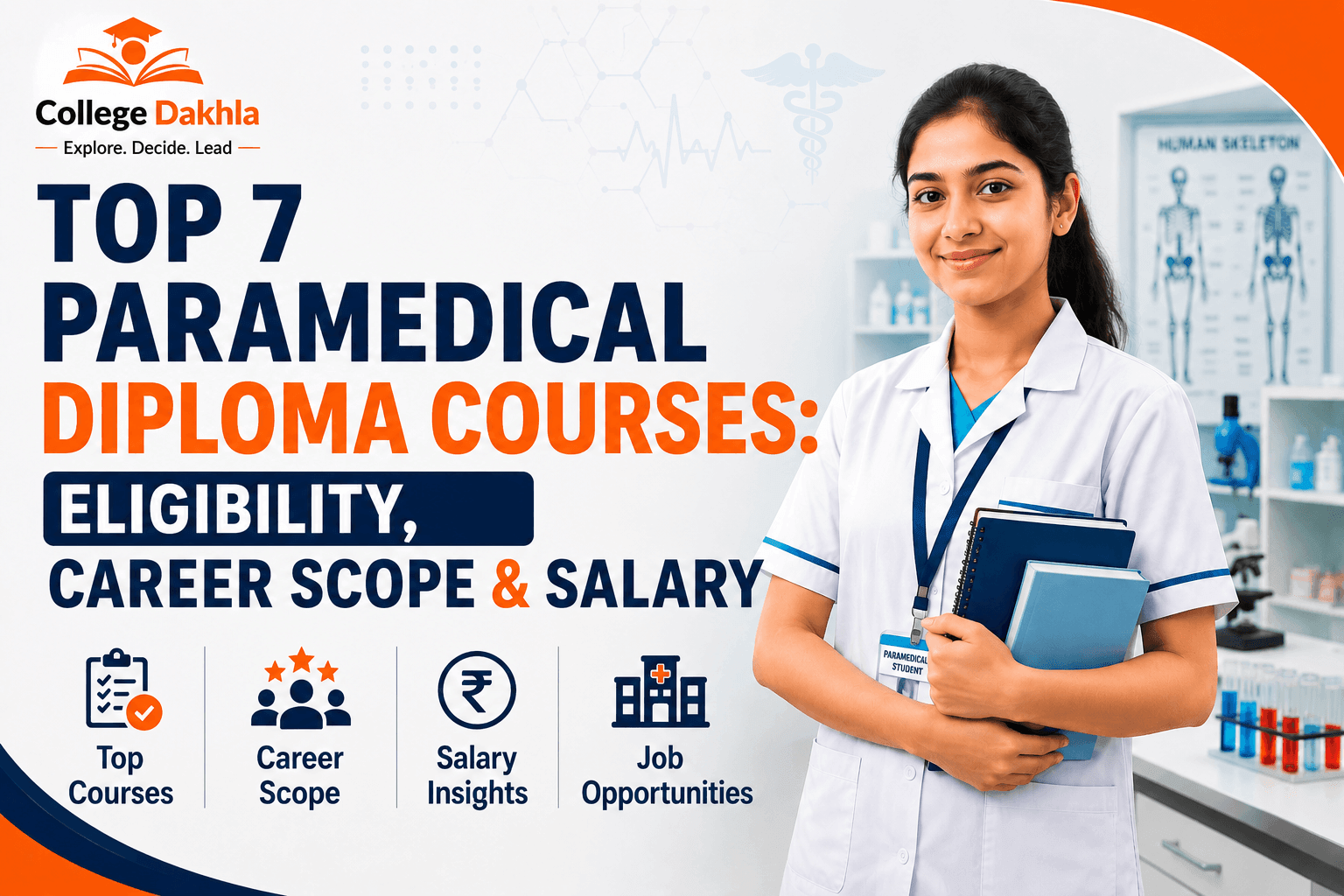
Top 7 Paramedical Diploma Courses: Eligibility, Career Scope & Salary
A career in healthcare doesn’t always mean becoming a doctor. If you want to enter the medical field with practical skills and in less time, Paramedical Diploma Courses can be a smart career choice.
In simple terms, paramedical diploma courses are skill-based healthcare programs that train students for roles such as laboratory technicians, radiology technicians, dialysis technicians, emergency medical technicians, and operation theatre technicians.
With growing demand for skilled healthcare professionals, these courses offer opportunities in hospitals, diagnostic centres, laboratories, emergency care units, and other healthcare facilities.
In this blog, we’ll cover the eligibility, course duration, top courses, career scope, and salary to help you understand whether a paramedical career is right for you.
Top 7 Paramedical Diploma Courses
Choosing the right paramedical diploma course can help you build a rewarding career in the healthcare sector. Here are some popular courses to consider:
|
Course |
Key Focus |
|
Diploma in Medical Laboratory Technology (DMLT) |
Laboratory testing and disease diagnosis |
|
Diploma in Radiology Technology |
X-ray, CT scan, and MRI imaging |
|
Diploma in Operation Theatre Technology (OTT) |
Surgical assistance and OT management |
|
Diploma in Emergency Medical Technology (EMT) |
Emergency care, trauma management, and ambulance services |
|
Diploma in Dialysis Technology |
Dialysis procedures and kidney patient care |
|
Diploma in Cardiac Care Technology |
ECG, cardiac monitoring, and heart care |
|
Diploma in Dental Hygiene Technology |
Oral healthcare and preventive dental care |
Note: Course fees and average salaries may vary by institute, location, course duration, skills, experience, and employer. Always check the latest course details before publishing.
1. Diploma in Medical Laboratory Technology (DMLT)
Diploma in Medical Laboratory Technology (DMLT) is a popular paramedical course that prepares students to work in medical laboratories.
The course focuses on laboratory testing, sample collection, disease detection, and assisting doctors in diagnosing various health conditions.
Job Roles after DMLT
- Medical Laboratory Technician
- Laboratory Assistant
- Pathology Technician
- Clinical Laboratory Technician
- Blood Bank Technician
Here are more details about this course:
|
Course Details |
Information |
|
Course Duration |
1-2 years |
|
Eligibility |
10th or 12th pass, depending on the institute |
|
Fees |
₹20,000-₹1.5 lakhs approximately |
|
Key Subjects |
Clinical Biochemistry, Microbiology, Hematology, Pathology, Blood Banking, and Laboratory Techniques |
|
Key Skills |
Sample handling, laboratory testing, equipment operation, accuracy, and basic medical knowledge |
|
Career Scope |
Hospitals, diagnostic laboratories, pathology labs, blood banks, research centres, and healthcare institutions |
|
Average Salary |
₹2-₹4.5 LPA for freshers, depending on skills, location, and employer |
2. Diploma in Radiology Technology
Diploma in Radiology Technology is a popular paramedical course that trains students to operate medical imaging equipment and assist healthcare professionals in diagnosing injuries, diseases, and other medical conditions.
Students learn about different imaging techniques, patient care, radiation safety, and the proper handling of diagnostic equipment.
Job Roles after Diploma in Radiology Technology
- Radiology Technician
- X-Ray Technician
- CT Scan Technician
- MRI Technician
- Imaging Assistant
Here are more details about this course:
|
Course Details |
Information |
|
Course Duration |
1-2 years |
|
Eligibility |
10th or 12th pass, depending on the institute |
|
Fees |
₹30,000-₹2 lakhs approximately |
|
Key Subjects |
Radiographic Techniques, X-Ray Imaging, CT Scan, MRI, Radiation Physics, Patient Care, and Radiation Safety |
|
Key Skills |
Operating imaging equipment, patient positioning, image quality assessment, radiation safety, and basic medical knowledge |
|
Career Scope |
Hospitals, diagnostic centres, imaging centres, clinics, trauma centres, and healthcare institutions |
|
Average Salary |
₹2.5–₹5 LPA for freshers, depending on skills, location, experience, and employer |
3. Diploma in Operation Theatre Technology (OTT)
Diploma in Operation Theatre Technology (OTT) is a paramedical course that trains students to assist medical professionals during surgeries, manage surgical instruments, and maintain a safe and sterile operation theatre.
Learn more about the Diploma in Operation Theatre Technology course.
Here are more details about this course:
|
Course Details |
Information |
|
Course Duration |
1-2 years |
|
Eligibility |
10th or 12th pass, depending on the institute |
|
Fees |
₹30,000-₹2 lakhs approximately |
|
Key Subjects |
Surgical Procedures, Operation Theatre Management, Surgical Instruments, Sterilization Techniques, Anesthesia Equipment, Patient Care, and Infection Control |
|
Key Skills |
Handling surgical instruments, maintaining sterilization, preparing the OT, assisting during procedures, infection control, and patient safety |
|
Career Scope |
Hospitals, surgical centres, emergency departments, clinics, trauma centres, and healthcare institutions |
|
Average Salary |
₹2.5-₹5 LPA for freshers, depending on skills, experience, location, and employer |
4. Diploma in Emergency Medical Technology (EMT)
Diploma in Emergency Medical Technology (EMT) is a paramedical course designed for students who want to work in emergency healthcare and provide immediate medical support to patients.
The course teaches students how to respond to medical emergencies, provide first aid, assist healthcare professionals, and handle patients during ambulance transportation.
Job Roles after Diploma in Emergency Medical Technology
- Emergency Medical Technician
- Ambulance Technician
- Emergency Care Assistant
- Emergency Room Technician
- Patient Care Technician
Here are more details about this course:
|
Course Details |
Information |
|
Course Duration |
1-2 years |
|
Eligibility |
10th or 12th pass, depending on the institute |
|
Fees |
₹30,000–₹1.5 lakhs approximately |
|
Key Subjects |
First Aid, Emergency Care, Trauma Management, Basic Life Support (BLS), Patient Assessment, Ambulance Operations, and Emergency Response |
|
Key Skills |
First aid, patient assessment, emergency response, basic life support, trauma care, communication, and handling emergency equipment |
|
Career Scope |
Hospitals, emergency departments, ambulance services, trauma centres, clinics, disaster-response services, and healthcare organizations |
|
Average Salary |
₹2.5–₹5 LPA for freshers, depending on skills, experience, location, and employer |
5. Diploma in Dialysis Technology
Diploma in Dialysis Technology is a specialized paramedical course that trains students to assist in the treatment of patients with kidney-related conditions.
The course focuses on operating dialysis machines, preparing patients for dialysis, monitoring their condition during treatment, and maintaining proper safety and hygiene standards.
Students can learn more about the Diploma in Dialysis Technician course to understand the training and career opportunities in this field.
Job Roles after Diploma in Dialysis Technology
- Dialysis Technician
- Renal Care Assistant
- Dialysis Assistant
- Hemodialysis Technician
- Patient Care Technician
Here are more details about this course:
|
Course Details |
Information |
|
Course Duration |
1-2 years |
|
Eligibility |
10th or 12th pass, depending on the institute |
|
Fees |
₹30,000-₹2 lakhs approximately |
|
Key Subjects |
Dialysis Procedures, Renal Anatomy and Physiology, Hemodialysis, Dialysis Equipment, Patient Care, Infection Control, and Basic Medical Sciences |
|
Key Skills |
Operating dialysis machines, patient monitoring, preparing dialysis equipment, maintaining hygiene, infection control, and basic emergency care |
|
Career Scope |
Hospitals, dialysis centres, kidney care clinics, healthcare institutions, and specialized renal care centres |
|
Average Salary |
₹2.5-₹5 LPA for freshers, depending on skills, experience, location, and employer |
6. Diploma in Cardiac Care Technology
Diploma in Cardiac Care Technology is a paramedical course that prepares students to assist doctors and other healthcare professionals in monitoring and caring for patients with heart-related conditions.
Students learn how to perform basic cardiac tests, operate monitoring equipment, observe patients, and support medical teams during cardiac procedures.
Job Roles after Diploma in Cardiac Care Technology
- ECG Technician
- Cardiac Care Technician
- Cardiac Monitoring Technician
- Cardiology Assistant
- Cardiac Technician
Here are more details about this course:
|
Course Details |
Information |
|
Course Duration |
1-2 years |
|
Eligibility |
10th or 12th pass, depending on the institute |
|
Fees |
₹30,000–₹2 lakhs approximately |
|
Key Subjects |
Cardiac Anatomy and Physiology, ECG, Cardiac Monitoring, Basic Cardiac Care, Medical Equipment, Patient Care, and Emergency Cardiac Support |
|
Key Skills |
Performing ECG tests, operating cardiac monitoring equipment, patient observation, maintaining accurate records, basic emergency care, and assisting healthcare professionals |
|
Career Scope |
Hospitals, cardiology departments, diagnostic centres, cardiac care units, clinics, and specialized heart-care institutions |
|
Average Salary |
₹2.5-₹5 LPA for freshers, depending on skills, experience, location, and employer |
7. Diploma in Dental Hygiene Technology
Diploma in Dental Hygiene Technology is a paramedical course that focuses on oral health, preventive dental care, and maintaining good dental hygiene. The course trains students to assist dental professionals, educate patients about oral care, and support basic dental procedures while following proper hygiene and infection-control practices.
Job Roles after Diploma in Dental Hygiene Technology
- Dental Hygienist
- Dental Assistant
- Oral Health Assistant
- Dental Care Technician
Here are more details about this course:
|
Course Details |
Information |
|
Course Duration |
1-2 years |
|
Eligibility |
10th or 12th pass, depending on the institute |
|
Fees |
₹30,000-₹2 lakhs approximately |
|
Key Subjects |
Dental Anatomy, Oral Hygiene, Preventive Dentistry, Dental Materials, Infection Control, Patient Care, and Basic Dental Procedures |
|
Key Skills |
Oral hygiene practices, dental assistance, patient communication, infection control, handling dental instruments, and maintaining dental records |
|
Career Scope |
Dental clinics, hospitals, dental colleges, community health centres, and specialized dental care centres |
|
Average Salary |
₹2-₹4.5 LPA for freshers, depending on skills, experience, location, and employer |
Eligibility for Paramedical Diploma Courses
The eligibility criteria may vary depending on the course, college, and admission guidelines. However, students generally need to meet the following requirements:
- Educational Qualification: Candidates should generally have passed Class 10 or Class 12 from a recognized board.
- Science Background: Many courses prefer or require students to have studied subjects such as Physics, Chemistry, Biology, or Mathematics in Class 12.
- Minimum Marks: Most institutes require a minimum percentage, which may vary depending on the course and institution.
- Age Requirement: Candidates may need to meet the minimum age requirement specified by the institute or regulatory authority.
- Admission Process: Admission may be based on merit, entrance examinations, or institute-specific eligibility criteria.
Duration of Paramedical Diploma Courses
Wondering how long the courses take? Most programs are designed to provide practical healthcare training within a short period.
- 1-Year Diploma: Quick, job-focused healthcare training.
- 2-Year Diploma: In-depth learning with practical exposure.
- 2-Year + Internship: Combines classroom learning with hands-on clinical experience.
- Clinical Training: Some institutes offer an additional 3–6 months of practical training in healthcare settings.
The exact duration may vary depending on the course, specialization, and institute.
Career Scope
A diploma in paramedical opens the door to diverse career opportunities in the healthcare sector. Graduates can find employment in:
Hospitals
- Diagnostic laboratories
- Blood banks
- Emergency care units
- Nursing homes
- Rehabilitation centres
- Government healthcare organizations
- Private healthcare institutions
With experience and additional certifications, professionals can advance to senior technical or supervisory roles.
If you’re exploring healthcare careers beyond MBBS, you can also check out these - Career options after NEET to understand the different paths available after the exam.
Conclusion
Paramedical Diploma Courses can be a smart first step toward a rewarding healthcare career. With practical training and multiple specializations, students can enter the healthcare industry without spending several years on a medical degree.
From DMLT and Radiology to Dialysis, EMT, and Operation Theatre Technology, there are several career paths to choose from.
The key is to select a course that matches your interests, skills, and career goals. With the right specialization and experience, a paramedical diploma can open doors to stable job opportunities and long-term growth in healthcare.
Frequently Asked Questions
They are skill-based healthcare programs that prepare students for careers in hospitals, laboratories, and diagnostic centres.
Students who have completed Class 10 or 12 from a recognized board are eligible, depending on the course requirements.
DMLT, Radiology Technology, Operation Theatre Technology, and Emergency Medical Technology are among the most popular choices.
No, most paramedical diploma courses do not require NEET for admission.
The duration of most courses is 1 to 2 years.
Freshers can earn between ₹2.5–4 LPA, with salaries increasing based on experience and specialization.
Yes, diploma holders can apply for various positions in government hospitals and healthcare departments.
Radiology Technology, Cardiac Care Technology, and Operation Theatre Technology are among the highest-paying diploma specializations.
You can work as a Lab Technician, Radiology Technician, OT Technician, EMT, Dialysis Technician, or Cardiac Technician.















![NEET Re-Exam Dates 2026 [Updated]](https://www.collegedakhla.com/uploads/blogs/NEET_Re-Exam_Dates_2026_Updated.png)

![B.Tech Fees in Private Colleges - [Updated List]](https://www.collegedakhla.com/uploads/blogs/B.Tech_Fees_in_Private_Colleges.png)
![Top 5 Universities in India - [Updated List 2026]](https://www.collegedakhla.com/uploads/blogs/Top_5_Universities_in_India.png)

































1.webp)