MCA Colleges for Artificial Intelligence
March 14, 2026
Mumbai | University | Estd 1958
(Reviews)

Indian Institute of Technology Bombay (IITB), established in 1958, is a premier institution of national importance dedicated to excellence in education, research, and innovation. The institute's vision is to be a leader in technology and science, fostering an environment where top-tier students and renowned faculty drive academic growth through national and international collaborations. IITB aims to create an academic spirit characterized by enlightenment, diligence, and fearlessness. As an "Institution of Eminence," it focuses on providing a multidisciplinary learning approach that balances rigorous engineering principles with professional leadership skills, ensuring its alumni excel globally in industry, academia, and research.
The campus offers a fully residential experience, supporting a holistic lifestyle that includes academic, recreational, and social engagement. With its autonomous status, the institute continues to influence the global technological landscape through innovative continuing education, distance learning, and cutting-edge research projects.
Key Details:
Establishment: Founded in 1958 with significant support from UNESCO and the government of the USSR.
Status: Declared an Institution of National Importance by an Act of Parliament in 1961 and recognized as an Institution of Eminence.
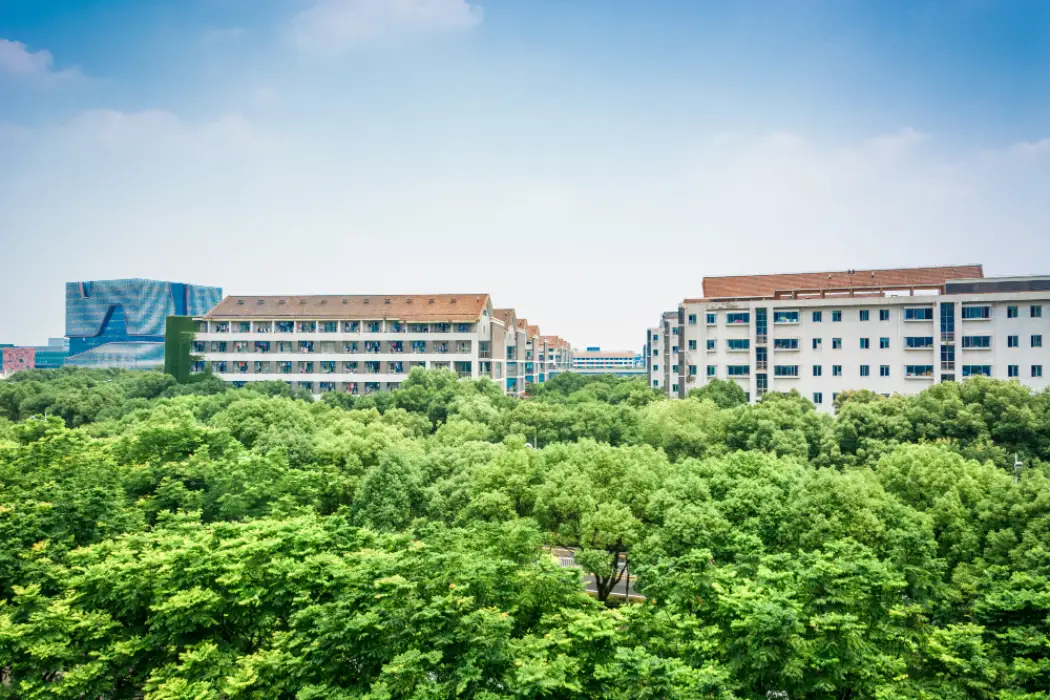
Campus: A vast 200-hectare residential campus located in Powai, Mumbai.
Governance: An autonomous institute governed by a Board of Governors and the IIT Council, chaired by the President of India.
Academic Range: Offers comprehensive programs including Undergraduate, Masters, PhD, and ePGD.
Facilities: Includes a Central Library, specialized research instruments, hospital, guest house, and extensive sports facilities.
Research & Innovation: Features a Research Park, Technology Transfer office, and Entrepreneurship center to facilitate industry collaboration.
IIT Bombay’s undergraduate curriculum is designed to meet 21st-century needs through cutting-edge teaching methodologies and hands-on courses like "maker space." The academic structure emphasizes early integration of Data Science and Artificial Intelligence, ensuring students are equipped with modern technical skills. A research-led approach is central to the learning experience, with students encouraged to explore faculty research activities and departmental scope. This academic rigor is balanced by an innovative framework that fosters critical thinking and practical problem-solving across all technical disciplines.
The university promotes a multidisciplinary learning approach by offering increased flexibility in course selection both within and outside of primary departments. Students can broaden their educational scope through non-technical courses and optional minor programs, facilitating a well-rounded graduate profile. The curriculum supports diverse interests, allowing for transitions between pure sciences, engineering, and design. By integrating technical depth with a wider range of academic electives, the institution prepares students to navigate complex, cross-disciplinary challenges in a global professional landscape.
| Course | Specializations | Eligibility |
| Bachelor of Technology (B.Tech.) | Aerospace Engineering, Chemical Engineering, Civil Engineering, Computer Science & Engineering, Electrical Engineering, Environmental Science and Engineering, Energy Science and Engineering, Industrial Engineering & Operations Research, Mechanical Engineering, Metallurgical Engineering & Materials Science, Engineering Physics | JEE-Advanced |
| Dual Degree (B.Tech. + M.Tech.) | Electrical Engineering (with various M.Tech specializations) | JEE-Advanced |
| Bachelor of Science (B.S.) | Chemistry, Economics, Mathematics, Applied Geophysics | JEE-Advanced / INMO |
| Bachelor of Design (B.Des.) | IDC School of Design | UCEED |
| M.Tech. | Aerospace, Biomedical, Chemical, Civil, Computer Science, Earth Sciences, Electrical, Energy Science, Environmental Science, Geoinformatics, Industrial Engineering, Mechanical, Metallurgical, Materials Science, Systems & Control | Graduation |
| M.Des. | Industrial Design, Visual Communication, Animation, Interaction Design, Mobility and Vehicle Design | Graduation |
| M.P.P. | Public Policy | Graduation |
| M.S. by Research | Computer Science and Engineering, Data Science and AI in CMInDS | Graduation |
| M.A.+Ph.D. | Philosophy | Graduation |
| M.Sc.+Ph.D. | Environmental Science and Engineering | Graduation |
| Ph.D. | Aerospace, Bioscience, Chemical, Chemistry, Civil, Computer Science, Earth Sciences, Electrical, Energy Science, Humanities and Social Sciences, Mathematics, Mechanical, Metallurgical, Physics, Climate Studies, Urban Science | Post-Graduation |
Indian Institute of Technology Bombay (IITB) is a premier industrial leadership development institution dedicated to preparing students for global excellence. The Placement Cell serves as a central hub, bridging the gap between brilliant minds and the corporate world through a rigorous and transparent recruitment process. Recognized worldwide for its research and academic standards, the institute maintains a formidable reputation with top-tier recruiters for producing graduates who combine fundamental technical strength with innovative thinking.
Placement Percentage: Approximately 75% for the 2023-24 session.
Average Package: 23.5 LPA.
Highest Package: 1.5 Crore per annum.
Indian Institute of Technology Bombay (IITB) maintains a distinguished standing as a global leader in engineering education and research. Established as an "Institute of National Importance," it is consistently recognized as one of the top technical universities worldwide. The institution’s reputation is built upon its outstanding faculty research contributions and the high calibre of its graduating students, attracting the best talent across bachelor's, master's, and doctoral programs.
Institution Status: Decreed as an "Institute of National Importance" by Parliament in 1961.
Global Rankings: Ranked #129 in the QS World University Rankings 2026; ranked #28 in QS WUR Ranking By Subject; ranked #71 in Asian University Rankings.
Other Recognitions: Ranked #235 in the QS Sustainability Rankings, highlighting its commitment to environmental and social impact.
Academic: 4/5
Faculty: 4/5
Infrastructure: 4/5
Accommodation: 4/5
Social Life: 4/5
Placement: 4/5
IIT Bombay is committed to ensuring that financial constraints do not hinder the educational journey of meritorious students. The institute follows a philosophy of "merit-cum-means," prioritizing support for economically disadvantaged students through tuition waivers, stipends, and specialized named awards endowed by alumni and corporate partners.
Institute Merit-cum-Means (MCM) Scholarship: Available to General and OBC-NC undergraduate students whose annual parental income does not exceed ₹5,00,000. It typically provides a full tuition fee waiver along with a monthly stipend.
Facilities of Free Messing: This program is for SC and ST students with a parental income limit of ₹5,00,000 per year. Benefits include an exemption from basic mess charges, a monthly pocket allowance of ₹250, and eligibility for a hostel room rent waiver.
Tuition Fee Remission: Targeted at undergraduate students from economically backward families. Students with a family income less than ₹1 lakh receive 100?e remission, while those with income between ₹1 lakh and ₹5 lakh receive a 2/3rd remission of tuition fees.
Named Scholarships: These are endowed by alumni and well-wishers for B.Tech, B.S., and B.Des students based on JEE Advanced or UCEED ranks and a parental income limit of ₹5,00,000. The specific financial benefits and criteria vary by the individual donor's endowment terms.
NBHM (National Board of Higher Mathematics) Fellowship: A Ph.D. level scholarship selected directly through NBHM. It provides a monthly stipend of ₹37,000 for the first two years, increasing to ₹42,000 thereafter, plus an annual contingency grant of ₹20,000.
Forbes Marshall Scholarship: A private M.Tech scholarship awarded through the Energy Systems & Engineering Department. It provides ₹20,000 per month, full tuition fee reimbursement, and a ₹15,000 contingency grant for travel and reports.
IITB Monash Scholarship: Specifically for Ph.D. students in the joint program, offering ₹41,000 per month for the first two years and ₹46,000 per month for the following two years.
DAE (DGFS) (BRNS) Fellowship: For M.Tech students selected through the Department of Atomic Energy. It offers a high stipend of ₹55,000 per month, full tuition fee reimbursement, and a ₹40,000 contingency grant.
The faculty at the Indian Institute of Technology Bombay comprises highly qualified individuals dedicated to a dual mission of teaching and pioneering research. These members are leaders in their respective fields, often holding advanced degrees from prestigious global institutions. Their work spans a vast array of disciplines, where they contribute to cutting-edge research while providing academic guidance and mentorship to students across undergraduate, postgraduate, and doctoral programs.
Key Details
Faculty Strength: The 2024 academic cycle includes a significant assembly of faculty advisors distributed across over 30 departments, centers, and schools.
Research Focus: The academic staff focuses on diverse research areas including STEM fields like Aerospace and Computer Science, along with Social Sciences, Policy Studies, and Management.
Global Background: While the page lists local institutional contact details, the faculty support a wide range of international-standard programs, including joint PhDs and advanced research degrees.
Student-Faculty Ratio: Not explicitly mentioned on the page.
Notable Faculty Examples
Prof. S. Akshay - Department of Computer Science and Engineering: Faculty advisor for the B.Tech program specializing in advanced computing.
Prof. Anupama Kowli - Department of Electrical Engineering: Serves as a faculty advisor for undergraduate students in the electrical engineering stream.
Prof. Achintya Kumar Dutta - Department of Chemistry: Faculty advisor for the 2-Year M.Sc. program specializing in chemical sciences.
Prof. Shivaram Kalyanakrishnan - Department of Computer Science and Engineering: Manages academic advising for the M.Tech postgraduate program.
Prof. Nivethida T. - Department of Biosciences & Bioengineering: Provides research and academic guidance for the M.Tech (Biomedical Engineering) specialization.

Physical Amenities
Room Specifications: Single occupancy, twin sharing, and triple sharing rooms. First and second-year undergraduate students reside in twin sharing rooms. Third and final-year students reside in single rooms. Furnished rooms include a bed, chair, study table, and cupboard.
Safety Features: 24/7 surveillance and security personnel. Resident wardens. Mandatory registration at security desks for visitors. Fire safety equipment including alarms and extinguishers.
Utility Services: In-house mess facilities with private caterers. Wi-Fi and LAN ports in rooms. Laundry services. On-campus banking, ATMs, and post office. Shopping center, market area, and pharmacy. 24x7 ambulance service.
Building Features: Power backup. Common rooms, TV rooms, and recreation halls. Study rooms and computer kiosks. Indoor sports facilities for snooker, table tennis, and football tables.
Visual Identification
Central Library
Students Activities Centre (SAC)

Indoor Sports Complex
Swimming Pool
Gulmohar Restaurant
Kendriya Vidyalaya (Central School)
Powai Lake and Sameer Hills
Jalvihar and Vanvihar Guest Houses
The fee structure at the Indian Institute of Technology Bombay (IITB) is divided into several components, primarily categorized as academic fees and hostel fees. Academic fees include tuition, registration, examination, and other university-related charges. These fees vary significantly based on the program level, category of the student (General, OBC, SC, ST, PwD), and whether the student is a new entrant or a continuing student. The institution periodically updates these structures for each semester to align with administrative policies and government regulations.
Hostel fees are charged separately and encompass room rent, electricity, water charges, and mess components. For many postgraduate and doctoral programs, the tuition fees are comparatively lower to encourage research, while undergraduate programs like B.Tech follow a standardized fee model. Significant fee concessions or waivers are provided to students from reserved categories and economically backward sections in accordance with government norms. The total cost of education at the institute reflects its status as a premier public technical university, balancing accessible education with high-quality infrastructure.
| Course | Specializations | Fees |
| B.Tech / B.S. / B.Des | Engineering, Sciences, Design | 1,16,150 |
| M.Tech / M.P.P. / MS-Research | Engineering, Public Policy, Research | 28,300 |
| M.Sc. | Chemistry, Physics, Mathematics, Statistics | 14,300 |
| MBA | Management | 2,72,850 |
| Ph.D. | All Research Areas | 18,300 |
| M.Des. | Design | 28,300 |
Total Reviews (165)
Alisa Manama Product Designer
This article really resonates with me! As a working parent, online learning has been a game-changer. I’m able to continue my education without sacrificing family time. I genuinely believe that this is the future of education.
Jordan Walk By Author
Absolutely! It’s amazing how online learning adapts to our lives, isn’t it? Being able to balance work, family, and education is such a huge advantage. Glad it’s working so well for you!
Lisa Oliva Fashion Designer
This article really resonates with me! As a working parent, online learning has been a game-changer. I’m able to continue my education without sacrificing family time. I genuinely believe that this is the future of education.