

Top 10 Career Options After BCom: Jobs and Scope
September 07, 2026

Ghaziabad, UP | College | Estd 2000
(Reviews)

ABES Engineering College (ABESEC) is a private technical institution located on National Highway 9 in Ghaziabad, Uttar Pradesh, within the Delhi–NCR education and employment region. Established in 2000, the college has developed an academic focus around engineering, computer science, emerging technologies, computer applications and management education. Its location provides students with access to the wider NCR ecosystem, which includes software companies, IT service providers, electronics businesses, manufacturing organisations, consulting firms and other employers that recruit graduates from technical institutions.
The college was granted autonomous status in 2025. It remains associated with Dr. A.P.J. Abdul Kalam Technical University (AKTU), Lucknow, for the applicable academic and degree framework. Students should check the current programme-specific approval, accreditation and degree-awarding arrangements before applying, because accreditation may apply to selected departments or programmes rather than automatically covering every course offered by the institution.
| Particular | Details |
|---|---|
| Institution name | ABES Engineering College |
| Common abbreviation | ABESEC / ABES |
| Established | 2000 |
| Institution type | Private technical institution |
| Location | NH-09, Ghaziabad, Uttar Pradesh |
| Campus area | Approximately 15.77 acres |
| Autonomous status | Granted in 2025 |
| University association | Dr. A.P.J. Abdul Kalam Technical University (AKTU), Lucknow |
| Accreditation | NAAC A grade reported; confirm the current validity period |
| Main academic areas | Engineering, computing, computer applications, technology and management |
| Admission routes | UPTAC counselling, JEE Main and course-specific selection processes |
| Residential facilities | Hostels for boys and girls |
| Student community | Approximately 8,090 students reported on the institution's overview |
| Alumni network | More than 24,000 alumni reported by the institution |
| Innovation activity | 54 startups incubated reported on the institutional overview |
ABES offers programmes designed for students interested in traditional engineering disciplines as well as technology-led career paths. The exact branch list, sanctioned intake, seat availability and accreditation status should be checked for the intended admission year.
Computer Science and Computing: Computer Science and Engineering is suited to students interested in software development, programming, algorithms, databases, operating systems, cloud technologies and application engineering. Specialised computing programmes introduce students to areas such as artificial intelligence, machine learning and data science, depending on the curriculum and branch selected.
Artificial Intelligence and Machine Learning: Students in AI and ML-focused programmes study programming, mathematics, data handling, machine-learning methods and intelligent systems. The field may lead to entry-level roles in software development, data-related work, automation and AI-enabled applications, but career outcomes depend on individual skills, internships and employer requirements.
Data Science: Data-focused study combines computing, statistics, analytical methods and data management. Students may develop capabilities in data processing, visualisation, statistical analysis and introductory predictive modelling. Practical projects and programming experience are important for applying these skills in industry.
Electronics and Communication Engineering: This discipline covers electronic circuits, communication systems, digital electronics, signal processing, embedded systems and related technologies. It can support careers in electronics, telecommunications, testing, embedded development and technical services.
Electrical and Computer Engineering: This area combines electrical engineering concepts with computing and electronic systems. Depending on the curriculum, students may study circuits, digital systems, computer architecture, embedded technologies, control systems and related applications.
Mechanical Engineering: Mechanical engineering provides a foundation in design, manufacturing, materials, thermal sciences, mechanics and production processes. Students can explore design engineering, manufacturing, quality assurance, industrial operations and related technical fields.
Postgraduate and Application-Oriented Study: The college also lists MCA, M.Tech and management-related study options. Programme availability, specialisations, eligibility requirements and admissions may differ from those of B.Tech and should be checked independently.
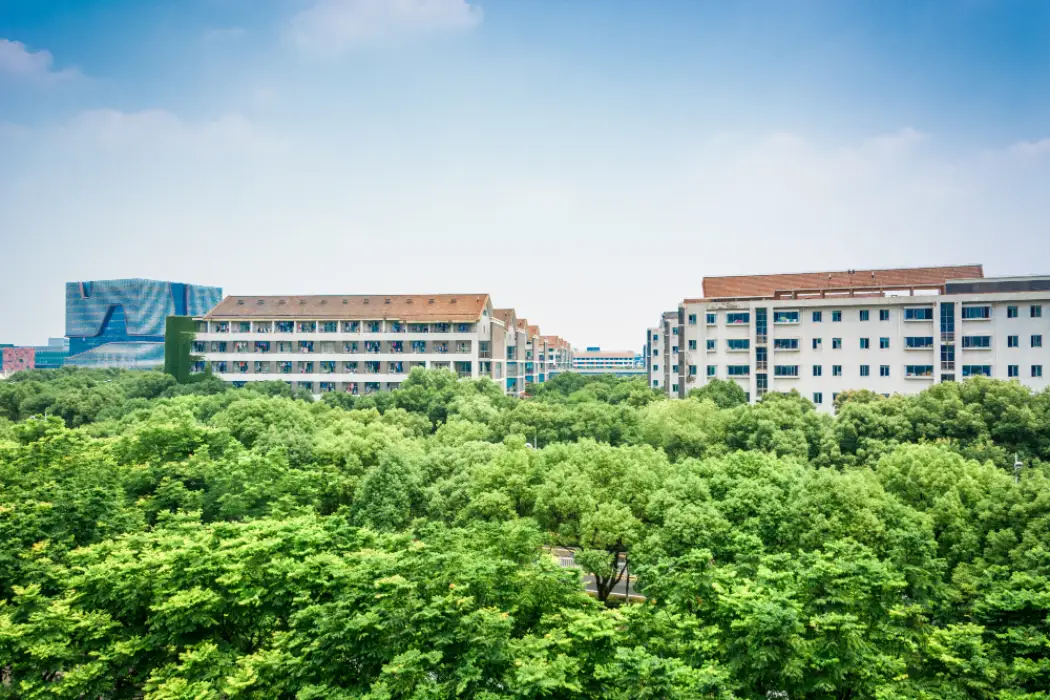
The college's campus is located on NH-09 in Ghaziabad and is intended to support academic learning, student activities and residential life. The institution reports a campus area of approximately 15.77 acres. Infrastructure information should be understood as a description of facilities available at the institution; students should inspect the specific laboratory, department, equipment and residential arrangements relevant to their chosen programme.
Laboratories and Practical Learning: Engineering education requires students to move beyond classroom theory. Laboratory sessions, practical assignments, technical demonstrations, project work and department-based activities help students apply concepts to real problems. The relevance and quality of laboratory experience depend on the particular branch and how actively students participate.
Library and Study Resources: A technical college library can support textbooks, reference material, academic journals, project research and preparation for examinations. Students should check current library access, digital resources, borrowing rules and reading-room timings during admission or campus visits.
Innovation and Entrepreneurship: The institution reports 54 incubated startups. Innovation activity can provide opportunities to explore product development, project ideas, entrepreneurship and collaborative problem-solving. Students interested in these areas should enquire about current incubation programmes, mentor access, competitions and eligibility for joining project teams.
Hostels and Residential Life: Hostel accommodation is available for boys and girls. Room options and charges vary, with different rates for AC and non-AC accommodation and for different sharing arrangements. The academic fee should not be treated as inclusive of hostel accommodation unless the applicable fee schedule explicitly says so.
Sports and Student Activities: Campus clubs, events, technical competitions, cultural activities and sports can help students develop teamwork, communication and organisational skills. Students should check current club schedules and facility access to understand which activities operate during their academic year.
ABES Engineering College is situated at the 19th kilometre stone on NH-09 in Ghaziabad, Uttar Pradesh. Its Delhi–NCR location can be useful for students seeking exposure to regional technology employers, internships, technical events and industry visits. Travel time, public transport availability and daily commuting costs depend on the student's starting location and the traffic conditions on the day of travel.
Students who plan to commute daily should compare the practical cost of transport with the total cost of hostel accommodation. Those considering residential facilities should review the room type, mess arrangements, security deposit, laundry provisions, hostel rules and annual fee before accepting a seat.
Students may be eligible to apply for central or Uttar Pradesh government scholarship schemes, AICTE-supported schemes and institutional assistance where available. Scholarship approval is not automatic: applicants generally need to meet the scheme's academic, category, income, gender or other conditions and submit the required documents by the applicable deadline.
Before relying on scholarship support to fund a programme, students should confirm the current scheme, application process, amount, renewal conditions and payment timeline. They should also budget for charges that may not be covered by tuition support, including hostel expenses, food, transport, books, uniforms, examination charges and personal costs.
ABES may be relevant to students who want to pursue engineering or technology education in the Ghaziabad–NCR region, particularly those interested in computing, AI and ML, data science, electronics, electrical and computer engineering or mechanical engineering. It may also be considered by graduates seeking MCA or M.Tech study and applicants interested in management programmes listed by the institution.
A sensible college comparison should consider the exact branch, total four-year or two-year cost, accommodation needs, curriculum, accreditation of the selected programme, internship access, placement data and personal commute. A college-wide placement figure or the highest salary package does not guarantee a similar outcome for every student or every branch.































































Total Reviews (0)
No reviews found.