Academy of Scientific and Innovative Research (AcSIR)
The Academy of Scientific and Innovative Research (AcSIR) is a premier public institution established in 2011 by an Act of Parliament (the Academy of Scientific and Innovative Research Act, 2011) and notified as an Institution of National Importance by the Government of India in 2012. Headquartered centrally at the CSIR-HRDC Campus in Ghaziabad, Uttar Pradesh, AcSIR operates through a highly unique hub-and-spoke model. Rather than utilizing a single traditional campus, it functions seamlessly across 37 national laboratories, 6 units, and 39 extension centers of the Council of Scientific & Industrial Research (CSIR) and Indian Council of Medical Research (ICMR) nationwide.
AcSIR’s primary mission is to optimize national research infrastructure to train top-tier Science and Technology (S&T) leaders. By offering frontier, interdisciplinary curriculum frameworks not typically taught in standard Indian universities, the academy fills a critical niche in advanced STEM, data analytics, and medical research education.
Key Details
- Establishment: Set up in 2011 under a dedicated Act of Parliament as an Autonomous Institute of National Importance.
- Campus Model: A distributed pan-India network leveraging national infrastructure (e.g., National Chemical Laboratory [NCL], National Physical Laboratory [NPL], Central Drug Research Institute [CDRI], and various ICMR facilities).
- Rankings:
- Ranked 9th in India under the Research Category by NIRF.
- Consistently positioned among the top-tier institutions in India for scientific research publications and patent outputs.
- Faculty Base: Powered by over 2,500 active, highly decorated scientists and technical specialists from CSIR and ICMR acting as internal instructional professors and doctoral mentors.
- Academic Mandate: Exclusively focused on advanced postgraduate diplomas, specialized technological Master's tracks, and expansive doctoral programs.
Admission Process & Eligibility (2026-27 Batch)
Admissions at AcSIR are conducted twice annually (for the January and August academic cycles). The selection infrastructure is managed through a centralized online web portal, followed by rigorous, localized screening tests and oral evaluation boards at individual participating national laboratories.
Academic Eligibility Profiles
1. Ph.D. in Sciences
- Qualifying Degree: A 2-year/4-semester Master’s degree in Science after a 3-year Bachelor’s degree with a minimum of 55% aggregate marks (50% for SC/ST/OBC non-creamy layer/PwD/EWS). Alternatively, a 4-year/8-semester Bachelor’s degree in Science with at least 75% aggregate marks is accepted.
- Mandatory Gateway Requirement: Applicants must hold a valid, tenable National-level Fellowship (such as CSIR-UGC NET JRF, DBT-JRF, ICMR-JRF, or DST-INSPIRE).
- Exception for Project Staff: Active temporary project assistants or fellows working inside CSIR/ICMR labs for at least one consecutive year are exempted from the external fellowship requirement, subject to an internal institutional screening panel and an oral examination.
2. Ph.D. in Engineering Sciences
- Qualifying Degree: A 2-year Master’s degree in Engineering or Technology (M.E./M.Tech) after a 4-year technical graduation with at least 55% marks. Alternatively, direct entry is open to exceptional 4-year Bachelor’s (B.E./B.Tech) graduates possessing a minimum of 75% marks alongside a valid GATE score.
3. Ph.D. in Medical Research
- Qualifying Degree: Open to candidates holding an NMC-recognized professional medical degree (MD, MS, DM, M.Ch, MBBS, or BDS/MDS) with at least 55% aggregate marks, or an M.Sc in Public Health/Biostatistics/Demography with a national fellowship.
4. Integrated Dual-Degree Ph.D. (IDDP) & M.Tech Tracks
- Qualifying Degree: A 4-year undergraduate degree in Engineering (B.E./B.Tech/BS) with a minimum of 55% marks and a valid Graduate Aptitude Test in Engineering (GATE) score.
Admission & Selection Timeline (August Intake Cycle)
The academic screening framework adheres to a structured annual schedule:
- March: Release of major national media notices and online portal activation.
- Mid-April: Closure of the web application processing window.
- May – June: Specialized written tests and/or oral selection interviews conducted locally by designated committees at individual research laboratories.
- Mid-July: Final combined merit selection list declaration and online payment processing.
- August: Comprehensive student reporting, campus orientation, and commencement of doctoral coursework.
Courses & Academics
AcSIR prioritizes deep-immersion research architectures rather than passive textbook instruction. The curriculum integrates an mandatory "Societal Program" where all doctoral candidates spend time applying their scientific skills to address grassroots rural or industrial challenges.
|
Program Track
|
Major Fields & Specializations
|
Base Entry Requirement
|
|
Ph.D. Sciences
|
Biological Sciences, Chemical Sciences, Physical Sciences, Mathematical & Information Sciences, Agricultural Sciences
|
M.Sc with 55% Marks + Active National Fellowship (JRF)
|
|
Ph.D. Engineering
|
Advanced Materials, Sustainable Chemistry, Structural Engineering, Electronics, Aerospace, Environmental Engineering
|
M.Tech with 55% Marks OR B.Tech with 75% Marks + GATE
|
|
Ph.D. Medical Research
|
Epidemiology, Clinical Virology, Genetics, Nutritional Biology, Public Health
|
MBBS/BDS/MD or M.Sc Public Health with 55% Marks
|
|
Integrated M.Tech + Ph.D.
|
High-Scale Engineering Systems, Microelectronics, Sensor Systems
|
4-Year B.Tech Degree + Valid GATE Merit Score
|
|
M.Tech
|
Advanced Materials & Sensor Systems
|
B.E./B.Tech in allied stream + GATE screening
|
|
Post Graduate Diploma
|
Big Data Analytics, Patinformatics (Patent Analysis), Applied Statistics, Technology Management, Regulatory Affairs
|
Bachelor's or Master's degree in Science/Engineering
|
Courses and Fees Description
Because AcSIR functions within national public laboratories funded by the Government of India, its educational fee matrix is highly subsidized, making it one of the most cost-effective centers for premium research in Asia.
Program Fee Matrix (2026-27 Fee Benchmarks)
- Ph.D. in Sciences / Engineering / Medical: Billed at an estimated base tuition rate of ₹24,000 to ₹31,000 per annum. The total 4-to-5 year course tuition is typically covered within ₹96,000 to ₹1,20,000.
- Integrated M.Tech + Ph.D. Program: The total cumulative academic tuition for the entire 5-to-6 year dual track is standardized around ₹1,28,000.
- M.Tech Programs: Tuition averages between ₹50,000 to ₹60,000 for the complete 2-year technical curriculum.
- Post Graduate Diplomas (1-Year Tracks): Highly nominal fee structures positioned between ₹15,000 to ₹25,000 total for fields like Big Data Analytics and Patinformatics.
Note: Individual host laboratories collect localized, separate nominal charges for hostel allocation, security deposits, and amenity maintenance over and above these primary AcSIR tuition costs.
Scholarship & Research Fellowships
AcSIR itself does not distribute direct internal university stipends; however, nearly 100% of admitted full-time regular students receive substantial external financial aid due to the mandatory fellowship admission criteria:
- CSIR/UGC JRF & SRF: Offers a monthly stipend ranging from ₹31,000 to ₹35,000 (plus a substantial House Rent Allowance [HRA] and annual contingency grants) during the active research cycle.
- DST-INSPIRE Fellowship: Matches the national JRF benchmarks, catering to first-class postgraduates who have secured top institutional ranks.
- Project Fellow Emoluments: Students admitted under the Project Assistant path receive salaries directly drawn from sanctioned R&D project grants (typically ranging from ₹25,000 to ₹31,000+ per month depending on experience and qualifications).
Placement & Career Trajectory
As a premier research academy, placement at AcSIR operates differently from typical commercial colleges. Graduates rarely participate in conventional campus software placement lines; instead, they are absorbed directly into high-end global scientific, industrial, and academic positions.
- Placement Index: Out of the postgraduate batches reported under NIRF filings, a stable median salary of ₹3.6 LPA was recorded for short-term 1-year programs, and ₹6 LPA for standard 2-year postgraduate technological tracks.
- Core Career Pathways:
- Postdoctoral fellowships at elite global research centers (across the US, Europe, and Japan).
- Core scientist appointments within national R&D defense and space frameworks (DRDO, ISRO, BARC).
- Senior research and development roles at major private pharmaceutical, biotech, and material technology conglomerates (e.g., Novartis, Shell, Biocon, Tata Chemicals).
- Intellectual Property (IP) firms, data science hubs, and tech consultation conglomerates (TCS, Infosys, IBM).
Infrastructure & Lab Configurations
Because AcSIR students carry out their work within actual national laboratories, they gain daily access to world-class scientific infrastructure that standard regional universities cannot afford to install.
Research Infrastructure
- Advanced Instrumentation: Daily operations with High-Resolution Transmission Electron Microscopes (HR-TEM), Nuclear Magnetic Resonance (NMR) suites, Next-Generation DNA Sequencers, Cleanroom fabrication labs, and advanced wind tunnels.
- Supercomputing Nodes: Heavy access to high-performance computing clusters and data centers for computational biology, climate modeling, and aerospace simulations.
- Digital Archives: Complete electronic access to global journal networks including ScienceDirect, IEEE Xplore, Nature, and ACS publications.
- Accommodations & Hostels: Fully equipped, secure hostel facilities for male and female research scholars across all individual CSIR lab sites, supplemented with recreational sports grounds, scientific gymnasiums, and premium institutional dining messes.
Visual Identification
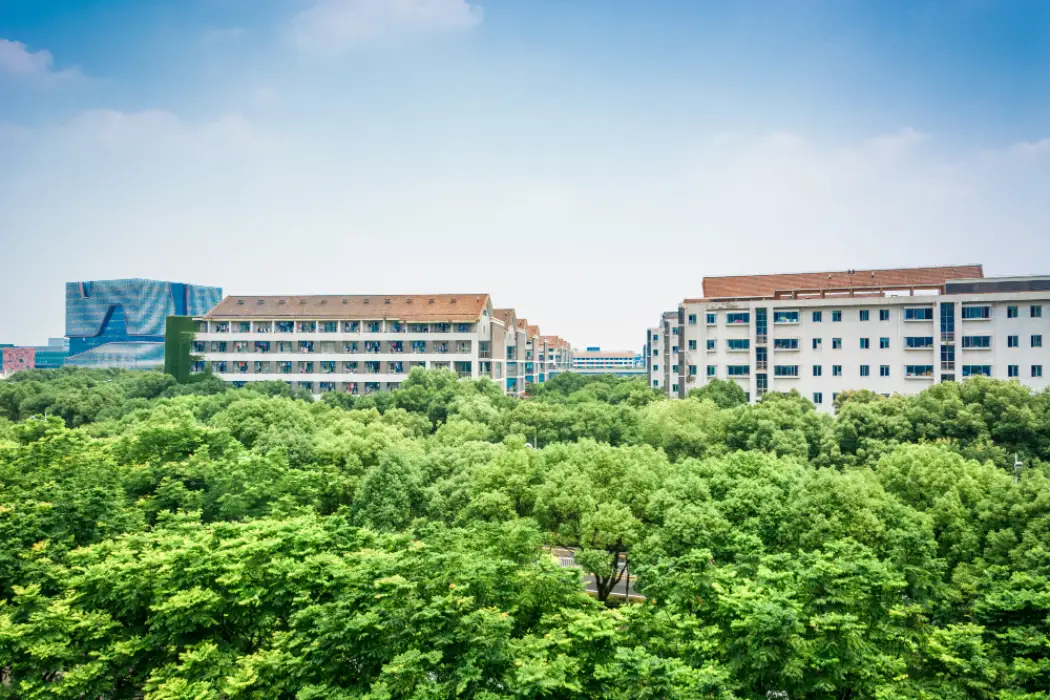
- State-of-the-Art CSIR Lab Facades
- High-Performance Computing Centers
- Cleanrooms & Nanotechnology Fabrication Zones
- Specialized Central Analytical Instrument Facilities (CAIF)
- On-Campus Scholar Housing and Dining Halls
Reviews
- Academic & Research Rigor: 4.9/5
- Faculty & Mentorship: 4.8/5
- Infrastructure & Equipment: 4.9/5
- Accommodation & Campus Welfare: 4.2/5
- Value for Money: 5/5
- Placement & Career Growth: 4.6/5






























![NEET Re-Exam Dates 2026 [Updated]](https://www.collegedakhla.com/uploads/blogs/NEET_Re-Exam_Dates_2026_Updated.png)


![B.Tech Fees in Private Colleges - [Updated List]](https://www.collegedakhla.com/uploads/blogs/B.Tech_Fees_in_Private_Colleges.png)
![Top 5 Universities in India - [Updated List 2026]](https://www.collegedakhla.com/uploads/blogs/Top_5_Universities_in_India.png)






































1.webp)






Total Reviews (0)
No reviews found.