Top 10 Career Options After BCom: Jobs and Scope
September 07, 2026
Greater Noida, Uttar Pradesh | College | Estd 2008
(Reviews)

Info
Courses & Fees
Admission
CutOff
Placement
Reviews
KCC Institute of Technology & Management (KCCITM) is a private technical and management institute located in Knowledge Park III, Greater Noida, Gautam Buddha Nagar, Uttar Pradesh. Established in 2008 as an institute, it is part of the wider KCC educational group, whose background extends further back. The institute focuses primarily on engineering, technology, computer science and management education, with undergraduate and postgraduate programmes intended to prepare students for professional careers in technical and business-related industries.
The institute operates in Greater Noida, a major education hub within the Delhi National Capital Region. The surrounding area has a concentration of engineering colleges, management institutes, universities, technology businesses, industrial organisations and student accommodation facilities. This location can provide students with access to academic events, internships, career fairs and employment opportunities across Greater Noida, Noida, Ghaziabad and the wider NCR, depending on their chosen discipline and individual qualifications.
Institutional Status and Academic Affiliation
KCC Institute of Technology & Management is an affiliated college rather than an independent degree-awarding university. Its engineering and management programmes are associated with Dr. A.P.J. Abdul Kalam Technical University (AKTU), Lucknow, and the relevant technical programmes are approved under the applicable All India Council for Technical Education (AICTE) framework. Students should check the specific programme's current approval, affiliation and applicable regulations before admission.
The wider KCC group also operates KCC Institute of Legal and Higher Education (KCC ILHE), which offers programmes under a separate academic arrangement associated with Guru Gobind Singh Indraprastha University (GGSIPU), Delhi. Applicants should not confuse KCCITM's engineering and management programmes with the separate commerce, media and law programmes offered through KCC ILHE. The awarding university, admission route, fee structure and eligibility rules depend on the particular institute and programme selected.
Engineering and Technology Education
Engineering is a principal area of study at KCCITM. The institute offers B.Tech pathways in core engineering disciplines and computing-related specialisations. Programme options include Computer Science and Engineering, Information Technology, Electronics and Communication Engineering, Mechanical Engineering, Civil Engineering, Electrical Engineering and selected specialisations in artificial intelligence, machine learning, data science and the Internet of Things.
The engineering curriculum is intended to develop fundamental scientific knowledge, technical understanding, practical problem-solving and familiarity with modern engineering applications. Students may undertake laboratory sessions, programming assignments, design work, technical projects, presentations and practical assessments as required by their course. The exact curriculum follows the applicable university syllabus and may include electives or specialised modules according to the programme.
Computer Science and Information Technology students can build knowledge in programming, data structures, algorithms, databases, operating systems, computer networks, software development and web technologies. Specialised computing pathways can introduce topics such as artificial intelligence, machine learning, data analytics, cloud computing and connected devices. Students interested in mechanical, civil, electrical or electronics disciplines develop different technical foundations relevant to their chosen field.
Management Education
KCCITM also offers management education through its MBA programme, described by the institute as MBA Plus. The two-year programme is designed to develop knowledge of business administration, organisational behaviour, finance, marketing, operations, strategic management, human resources and business communication. Management learning may include case studies, presentations, team assignments, projects, practical exercises and industry-oriented activities.
The management programme is intended for graduates seeking opportunities in business development, sales, marketing, finance, human resources, operations, entrepreneurship and other organisational functions. Students can strengthen their career prospects by developing analytical skills, professional communication, teamwork, decision-making and a sound understanding of business processes.
Postgraduate Engineering and Advanced Study
Students who want to continue their technical education after completing an undergraduate engineering degree can explore M.Tech programmes in selected disciplines, including Computer Science and Engineering, Electronics and Communication Engineering and Mechanical Engineering, subject to current availability. Postgraduate engineering study typically places greater emphasis on advanced technical subjects, specialised knowledge, research-oriented work and discipline-specific problem-solving.
Eligibility generally requires a relevant bachelor's degree in engineering or technology. GATE scores may be used in the selection process, while admission to remaining seats may follow the applicable qualifying-examination merit and university or institute rules. Applicants should confirm the precise specialisation, approved intake and admission criteria for the current session.
Campus and Infrastructure
KCCITM is located on a campus of approximately 40 acres in Knowledge Park III, Greater Noida. The institute describes its learning environment as including centrally air-conditioned classrooms, campus connectivity, library resources, computer laboratories, engineering laboratories, academic spaces and facilities for extracurricular activities. Infrastructure is intended to support classroom teaching, technical practice, project work and student development.
Laboratory access is particularly important for engineering students because technical learning requires opportunities to apply classroom concepts. Computer-related programmes require suitable computing resources, while electronics, mechanical, electrical and civil engineering students benefit from discipline-specific practical facilities. Applicants should review the facilities relevant to their selected branch and confirm the current availability of laboratory equipment, software, project resources and supervised practical sessions.
Faculty and Learning Environment
The institute's academic approach combines university-prescribed coursework with classroom teaching, practical sessions, assignments, examinations and project-based learning. Faculty members support students in understanding technical and management concepts, preparing for assessments and developing subject-specific competence. The quality of an individual student's experience can depend on the department, class participation, faculty interaction, practical exposure and the student's own commitment to study.
Students are encouraged to develop communication, teamwork, critical thinking, professional discipline and the ability to explain technical or business ideas clearly. These skills are important in both engineering and management roles, where employees must work with colleagues, clients, project teams and organisational stakeholders.
Career Development and Industry Exposure
KCCITM provides career and recruitment support for students preparing for internships and employment. The institute's placement activities may include employer interactions, recruitment drives, career guidance, aptitude preparation, interview practice, resume development and professional-skills training. The opportunities available in a particular year depend on participating employers, job requirements, the graduating batch and the student's eligibility.
Engineering students may pursue software development, IT services, technical support, electronics, manufacturing, infrastructure and other technology-related roles. MBA graduates may target management trainee positions, business development, marketing, sales, finance, human resources, operations and related functions. Employment outcomes are affected by technical knowledge, academic performance, internships, communication, projects, interview performance and current hiring conditions.
Hostel and Student Life
The institute offers residential accommodation for students who come from outside Greater Noida, subject to availability and applicable hostel rules. Hostel facilities are described as accommodating male and female students separately, with different room occupancy and comfort options. Students should confirm the current annual hostel charge, room category, mess arrangements, electricity or air-conditioning charges, deposits, rules and payment schedule before admission.
Campus life may include academic events, seminars, technical activities, sports, student participation and other extracurricular opportunities. Such activities can help students develop confidence, teamwork, organisation and communication skills alongside their academic studies. Students living in the hostel should also consider food, transport, personal expenses, study materials and other living costs when calculating their total education budget.
Location and Connectivity
The institute's address is 2B–2C, Knowledge Park III, Greater Noida, Uttar Pradesh 201306. Knowledge Park III is part of Greater Noida's educational zone and is connected to the wider NCR road and public-transport network. Students can assess travel options around the Knowledge Park area and nearby metro connections when planning daily commuting or residential arrangements.
The location can be relevant for students looking for a technical or management institute within the Greater Noida education corridor. However, proximity to a corporate or industrial centre does not guarantee an internship or job. Students should actively use career-development services, build relevant skills and apply for suitable opportunities.
Scholarships and Financial Assistance
The institute describes merit-based scholarships and other forms of financial assistance for eligible students. Depending on the current policy, concessions may be available based on academic performance, sports achievements, category, financial circumstances or other specified criteria. Scholarship percentages, eligibility conditions and renewal rules can change between academic sessions and programmes.
Applicants should obtain the current scholarship policy in writing and confirm whether an award applies to the first semester, first year or full course duration. They should also ask whether a scholarship covers tuition alone or includes other mandatory charges. Hostel, mess, transport and personal expenses may remain payable even when a tuition concession is granted.
Who Should Consider KCCITM?
KCC Institute of Technology & Management may be considered by students interested in engineering, computer science, information technology, artificial intelligence, machine learning, data science, electronics, mechanical engineering, civil engineering, electrical engineering or management studies in Greater Noida. Its AKTU affiliation, engineering-focused programme range, MBA offering, campus facilities and location within the Delhi NCR education hub are relevant factors for prospective applicants.
The right choice depends on the student's preferred branch, academic eligibility, total budget, career objectives, entrance-examination performance and expectations regarding internships and placements. Before enrolling, applicants should compare the course curriculum, current fee schedule, hostel expenses, programme approvals, laboratory facilities, faculty support and the latest course-specific placement outcomes.
Institutional Address
KCC Institute of Technology & Management, 2B–2C, Knowledge Park III, Greater Noida, Gautam Buddha Nagar, Uttar Pradesh 201306, India.
KCCITM is a private affiliated institute and should be distinguished from an independent university. Its technical and management programmes follow their applicable academic and regulatory arrangements, while certain commerce, media and law programmes in the wider KCC group are offered through a separate institute and university affiliation.
0 Reviews
Very Good
KCC Institute of Technology & Management offers undergraduate engineering programmes, postgraduate engineering programmes and management education. The wider KCC group also operates a separate institute offering programmes in business administration, computer applications, commerce, journalism and law. Because these programmes may belong to different academic and fee arrangements, applicants should verify the exact institute name, awarding university and fee schedule before applying.
For the 2026–27 academic session, the published KCCITM fee schedule lists B.Tech tuition at ₹60,000 per semester for the specified engineering specialisations and MBA Plus at ₹65,000 per semester. Published M.Tech fees vary by programme and must be confirmed against the current fee schedule. The fees below represent academic charges where specified; hostel, meals, transport, deposits and other applicable expenses may be additional.
B.Tech – Bachelor of Technology
B.Tech is the institute's principal undergraduate engineering qualification. The programme generally runs for four years across eight semesters and is designed to develop technical knowledge, analytical ability, practical skills and engineering problem-solving.
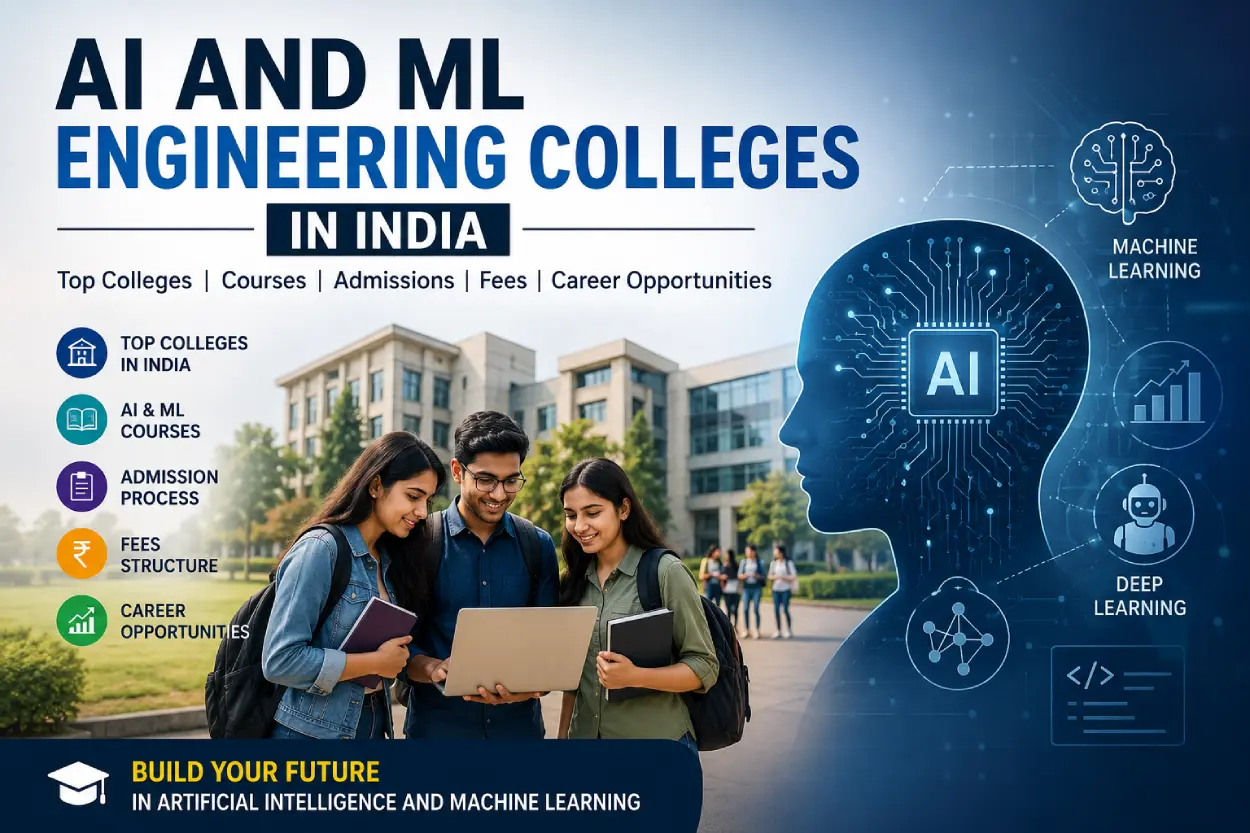
Available engineering and computing pathways include:
Computer Science and Engineering (CSE): Programming, algorithms, databases, operating systems, software development, computer networks and computing fundamentals.
Computer Science and Engineering – Artificial Intelligence: Computing foundations combined with subjects relevant to intelligent systems and AI applications.
Computer Science and Engineering – Artificial Intelligence and Machine Learning: Programming, data handling, machine learning foundations and AI-related applications.
Computer Science and Engineering – Data Science: Computing, data analysis, databases, statistical concepts and data-driven problem-solving.
Computer Science and Engineering – Internet of Things (IoT): Connected devices, sensors, embedded systems, networks and related applications.
Information Technology (IT): Software, networks, information systems, databases and IT-enabled services.
Electronics and Communication Engineering (ECE): Electronics, communication systems, circuits, signals and associated technical applications.
Mechanical Engineering: Engineering mechanics, manufacturing, machine design, thermal systems and related subjects.
Civil Engineering: Construction, structural fundamentals, surveying, materials, infrastructure and related engineering areas.
Electrical Engineering: Electrical circuits, machines, power systems and related engineering concepts.
The current fee schedule lists ₹60,000 per semester for the specified B.Tech specialisations. Across eight semesters, this represents approximately ₹4,80,000 in semester tuition fees, before any additional charges or adjustments specified by the institute. The total payable amount should be confirmed using the official fee schedule for the student's admission year.
B.Tech Lateral Entry
Eligible diploma holders and other candidates who meet the applicable rules may be considered for lateral entry into the second year of an engineering programme. Lateral-entry admission generally shortens the period of study compared with the standard four-year route, subject to the applicable university regulations and accepted prior qualification.
Applicants should confirm the accepted diploma branch, minimum marks, equivalence requirements, available seats and current lateral-entry fee schedule. The standard B.Tech fee should not automatically be assumed to cover every lateral-entry arrangement without confirmation.

MBA Plus – Master of Business Administration
MBA Plus is a two-year postgraduate management programme divided into four semesters. It is intended for graduates who want to build knowledge of business administration, leadership, finance, marketing, operations, organisational behaviour, strategy and management decision-making.
Management education can support career interests in business development, sales, marketing, human resources, financial services, operations, consulting and entrepreneurship. Students may engage in case studies, presentations, team projects and other activities intended to develop analytical thinking and professional communication.

The published 2026–27 fee schedule lists ₹65,000 per semester for MBA Plus. Across four semesters, this represents approximately ₹2,60,000 in semester tuition fees, subject to the current fee schedule and any additional charges. Applicants should check the exact specialisation options, eligibility, accepted entrance examinations, admission method and whether any separate registration or examination charges apply.

M.Tech – Master of Technology
M.Tech is a postgraduate engineering qualification generally completed over two years and four semesters. It allows eligible engineering graduates to pursue more advanced study in a relevant technical discipline. KCCITM lists programmes in areas including Computer Science and Engineering, Electronics and Communication Engineering, and Mechanical Engineering, subject to current availability.
M.Tech candidates generally need a relevant B.E. or B.Tech qualification. GATE scores may be used for selection, while non-GATE applicants may be considered for remaining seats under the applicable admission rules. The institute's published admission information specifies a minimum of 60% in the relevant undergraduate qualification for standard eligibility, with a lower threshold mentioned for certain reserved categories. Candidates should verify the precise conditions applicable to their case.
The fee schedule may differ by M.Tech specialisation. The current programme-specific amount should be confirmed before admission; applicants should not apply the B.Tech or MBA semester fee to an M.Tech programme.
Courses Offered Through the Wider KCC Group
The wider KCC group also operates KCC Institute of Legal and Higher Education (KCC ILHE). Its programmes are separate from the core engineering and management offerings of KCCITM and follow a different university affiliation and admission system.
Programmes associated with KCC ILHE include:
BBA – Bachelor of Business Administration: Undergraduate study in business administration, management and organisational functions.
BCA – Bachelor of Computer Applications: Computing, programming, software and information technology foundations.
B.Com (Hons.): Commerce, accounting, finance and business-related subjects.
BA Journalism and Mass Communication (BAJMC): Media, journalism, communication and content-related study.
BA LL.B (Hons.): An integrated undergraduate law programme.
BBA LL.B (Hons.): An integrated programme combining business-related study with legal education.
The published fee schedule for KCC ILHE lists an annual fee of ₹95,000 for BBA and ₹95,000 for BCA for the stated academic year. Fees for B.Com, BAJMC and law programmes should be checked separately under the applicable GGSIPU and institute fee arrangements. Applicants should not assume that KCC ILHE programmes are governed by the same fee or admission process as KCCITM's B.Tech and MBA courses.
Indicative Academic Fee Summary
| Programme | Typical duration | Published fee basis |
|---|---|---|
| B.Tech – listed specialisations | 4 years | ₹60,000 per semester |
| B.Tech – approximate eight-semester tuition | 4 years | ₹4,80,000 |
| MBA Plus | 2 years | ₹65,000 per semester |
| MBA Plus – approximate four-semester tuition | 2 years | ₹2,60,000 |
| M.Tech | 2 years | Confirm programme-specific fee |
| BBA through KCC ILHE | 3 years, subject to current structure | ₹95,000 per year listed |
| BCA through KCC ILHE | 3 years, subject to current structure | ₹95,000 per year listed |
| B.Com (Hons.) through KCC ILHE | As per current programme structure | Confirm current fee |
| BAJMC through KCC ILHE | As per current programme structure | Confirm current fee |
| BA LL.B (Hons.) / BBA LL.B (Hons.) | Integrated law programmes | Confirm current fee |
These figures should be read as the fee basis published for the specified academic session, not as a guarantee of the complete amount payable for every student. Programme-specific charges, revised university fees and additional mandatory payments may affect the final total.
Hostel and Accommodation Fees
KCC provides hostel accommodation for students who need to live near the campus. Published hostel listings show different charges based on occupancy, room type and amenities. The following amounts are indicative annual figures reported for the listed room categories:
| Hostel category | Approximate annual fee |
|---|---|
| Triple occupancy – cooler room | ₹1,35,000 |
| Triple occupancy – AC room | ₹1,50,000 |
| Double occupancy – shared AC room | ₹1,45,000 |
| Double occupancy – cooler room | ₹1,75,000 |
| Double occupancy – AC room | ₹1,95,000 |
| Single occupancy – shared AC room | ₹1,55,000 |
| Single occupancy – cooler room | ₹1,85,000 |
| Single occupancy – AC room | ₹2,10,000 |
| Dormitory – AC room | ₹1,20,000 |
The room labels and listed prices should be confirmed with the hostel office because accommodation packages and room availability can change. Some published listings may classify shared rooms differently, so students should ask for a written quotation covering the exact occupancy, air-conditioning arrangement, meals, electricity, security deposit and other charges.
Mess, Food and Other Living Expenses
Students should confirm whether meals are included in the selected hostel package or billed separately. Other possible expenses include transport, books, stationery, laptops, software, laboratory materials, examination charges, registration fees, personal expenses and deposits. These costs can vary considerably depending on the programme and the student's lifestyle.
For students who live on campus, the complete budget should include tuition plus accommodation and food over the full duration of the course. For a four-year B.Tech programme, even a modest annual difference in hostel or meal costs can materially change the total expenditure. Students should calculate their likely expenses for all semesters before accepting an admission offer.
Scholarships and Financial Assistance
KCC advertises merit-based scholarships and other forms of fee assistance subject to eligibility and the current policy. The institute has published scholarship offers linked to Class 12 marks, including examples of first-semester fee waivers for high-performing students. Other concessions may be available under specified sports, category, financial-need or other schemes, depending on current rules.
Scholarship terms should be verified in writing. Applicants should confirm the minimum marks required, the amount waived, whether the concession applies to the first semester or a longer period, the conditions for renewal and whether additional charges remain payable. Scholarship offers may be subject to deadlines, document verification and seat availability.
How to Plan the Total Course Cost
Before enrolment, students should request a written, course-specific fee breakdown showing tuition, registration, examination charges, security deposits, hostel accommodation, mess or meal expenses, transport and any programme-specific payments. The student should also confirm the refund policy and the payment dates for each semester or academic year.
Fee Confirmation for 2026–27
The fee figures in this description are based on published schedules and listings for the relevant academic session. The final payable amount depends on the selected course, admission route, current university rules, room category and any applicable scholarship. Applicants should confirm the latest written fee structure before making a payment.
KCC Institute of Technology & Management offers admission to undergraduate engineering programmes, postgraduate engineering programmes and management education. Admission is conducted according to the eligibility rules of the relevant programme, the applicable university regulations, entrance-examination requirements and seat availability. The institute's technical and management programmes are associated with Dr. A.P.J. Abdul Kalam Technical University (AKTU), Lucknow, and relevant technical programmes follow the applicable AICTE framework.
The wider KCC group also operates KCC Institute of Legal and Higher Education, which offers selected undergraduate programmes through a separate affiliation with Guru Gobind Singh Indraprastha University (GGSIPU), Delhi. Applicants should first identify the exact institute and programme they intend to join because admission routes, eligibility conditions, entrance examinations, fees and counselling procedures differ.
B.Tech Admission
B.Tech admission is available to eligible candidates who have completed Class 12 or an equivalent examination with the prescribed science subjects. For most engineering branches, Physics and Mathematics are required along with the other subjects accepted under the applicable eligibility rules. Candidates must meet the minimum marks and other conditions specified for the current admission session.
Admission may take place through Uttar Pradesh Technical Admission Counselling (UPTAC), using JEE Main results for the applicable counselling route. The institute also describes institute-level or management-quota admission based on JEE Main and Class 12 merit, subject to the relevant rules and available seats.
Candidates applying for B.Tech should:
Check the current eligibility conditions for the preferred engineering branch.
Register for JEE Main if they intend to use the entrance-examination route.
Complete UPTAC registration and counselling where applicable.
Select the correct institute and course during choice filling.
Monitor seat-allotment results and reporting deadlines.
Submit academic documents for verification.
Pay the required fee within the prescribed period after receiving an offer.
Confirm the final admission and reporting instructions with the institute.
The institute's UPTAC college code for the relevant B.Tech counselling route is reported as 492. Applicants should confirm the code and current counselling instructions on the applicable admission portal before submitting their choices.
B.Tech Lateral-Entry Admission
Eligible diploma holders and candidates meeting the prescribed rules may apply for lateral entry into the second year of a B.Tech programme. Applicants usually need a recognised diploma in an appropriate engineering discipline or another accepted qualification under the applicable university regulations.
The admission process may consider the diploma branch, qualifying marks, equivalence, available seats and the current counselling or institute-level procedure. Candidates should confirm whether their previous qualification matches the desired engineering branch and whether additional requirements apply.
MBA Plus Admission
MBA Plus is a two-year postgraduate management programme for graduates who wish to develop business and leadership skills. Candidates generally need a recognised bachelor's degree and must satisfy the minimum marks specified for the current admission year.
Management entrance examinations such as CAT, MAT or XAT may be accepted according to the applicable admission policy. The institute also describes direct or institute-level admission routes, subject to the current rules and availability. Applicants should verify which tests are accepted for their chosen session and whether an interview, document review or other selection step is required.
The MBA admission process generally involves:
Completing the online enquiry or application form.
Providing academic and personal information.
Submitting graduation marksheets and relevant entrance-examination details.
Attending any required interview or selection activity.
Receiving and reviewing the admission offer.
Confirming the fee structure and payment schedule.
Completing document verification and enrolment formalities.
Students should check the available specialisations and curriculum before applying. They should also confirm whether a quoted fee includes tuition alone or other mandatory charges.
M.Tech Admission
Applicants for M.Tech generally need a relevant B.E. or B.Tech qualification and must meet the prescribed minimum aggregate marks. Admission may consider GATE performance, while candidates without a GATE score may be considered for remaining seats according to the applicable university and institute rules.
The institute's published information specifies a 60% minimum for the relevant undergraduate qualification in the standard pathway, with a different threshold for certain categories. Applicants should verify the current eligibility and any relaxation that applies to them.
The process may include application submission, academic-document verification, entrance-score evaluation, merit consideration and confirmation of seat availability. Candidates should check the exact specialisation, current approved intake and applicable fee before accepting an offer.
Admission Through KCC Institute of Legal and Higher Education
The wider KCC group also offers BBA, BCA, B.Com (Hons.), BA Journalism and Mass Communication, BA LL.B (Hons.) and BBA LL.B (Hons.) through KCC Institute of Legal and Higher Education. These programmes follow a separate admission and university-affiliation arrangement and should not be confused with KCCITM's B.Tech, MBA and M.Tech programmes.
The published admission process lists CUET-UG for BBA, BCA, B.Com and BAJMC, and CLAT for BA LL.B (Hons.) and BBA LL.B (Hons.), subject to current university rules. Applicants generally need to meet the specified Class 12 eligibility, including the prescribed minimum marks and any applicable relaxation.
Candidates applying to these programmes should complete the relevant entrance-examination process, register for GGSIPU counselling where required, select the appropriate course and institute, and follow the seat-allotment and reporting instructions. They should confirm the exact course code, eligibility, fee schedule and university counselling requirements for the current year.
Application Process and Documents
Applicants should use the relevant institute or university admission portal and complete all required steps within the prescribed deadline. Information submitted in the application form must match the candidate's official documents.
Documents commonly required include:
Class 10 marksheet or certificate.
Class 12 marksheet and certificate.
Graduation marksheets and degree certificate for postgraduate admission.
Diploma certificate and marksheets for lateral-entry applicants.
JEE Main, CAT, MAT, XAT, GATE, CUET or CLAT scorecard, where applicable.
Government-issued identity proof.
Recent passport-size photographs.
Transfer certificate and migration certificate, where required.
Character certificate.
Category or reservation certificate, where applicable.
Domicile certificate, if required for a particular admission route.
Any additional document requested by the university or counselling authority.
Applicants should retain copies of their application, fee receipts, entrance-examination details and admission communications. Incorrect information or incomplete documents can delay verification or affect admission.
2026 Admission Dates and Current Status
Admission dates are not identical across all KCC programmes. B.Tech counselling follows the applicable UPTAC schedule, MBA and M.Tech admissions follow their respective entrance or institute-level processes, and KCC ILHE programmes follow the relevant GGSIPU counselling arrangements.
For the 2026–27 session, the published admission information reported UPTAC counselling rounds during July–September 2026 and an institute-level B.Tech application deadline of 14 August 2026 for a specified route. MBA direct applications were also reported as open on a rolling basis in the published update. These dates do not establish a single universal opening and closing date for every programme.
As of 14 October 2026, some application or counselling windows may have concluded, while certain courses or routes may still have vacant-seat or later-round procedures. Applicants should check the current status for their exact programme before applying. A past deadline should not be presented as a guaranteed current opportunity.
Admission Fees, Scholarships and Seat Confirmation
Applicants should verify the application fee, semester tuition, registration charges, security deposit, hostel costs and other applicable payments before accepting a seat. Scholarship or fee-concession eligibility should be confirmed separately because it may depend on academic performance, category, programme, financial circumstances and the current policy.
A candidate should treat admission as confirmed only after meeting the relevant selection requirements, completing document verification and following the official fee-payment and enrolment instructions. Where counselling is required, applicants must also comply with the counselling authority's seat-allotment and reporting rules.
Important Considerations Before Applying
Students should compare the curriculum, engineering specialisation, academic affiliation, approval status, faculty support, practical facilities, hostel arrangements, total cost and course-specific placement information before making a decision. They should also check the refund policy and the consequences of withdrawing after fee payment.
Admission to one KCC programme does not automatically mean admission to another programme offered by the wider group. B.Tech, MBA, M.Tech and programmes offered through KCC ILHE may have different eligibility criteria, entrance examinations, university affiliations and fee structures.
Final Admission Guidance
KCC Institute of Technology & Management may be considered by candidates seeking engineering or management education in Greater Noida. The most appropriate route depends on the programme, prior academic qualification, entrance-examination performance and current seat availability. Applicants should confirm the latest official admission notice and complete each required step within the relevant deadline for the 2026–27 academic session.
KCC Institute of Technology & Management does not have one universal cut-off score that applies to every course. Admission thresholds differ by programme, engineering branch, entrance examination, counselling round, candidate category and admission route. For B.Tech, cut-off information is generally expressed as a JEE Main rank used in the UPTAC counselling process. MBA and M.Tech admission may follow different entrance-examination or merit-based criteria.
A qualifying percentage, entrance-examination score, percentile and closing rank are different measures. Applicants should check the course, admission year, category, quota and counselling round before comparing any cut-off figure. The numbers below are historical or published counselling references and should not be treated as guaranteed admission thresholds for every applicant.
B.Tech Cut-off – JEE Main and UPTAC
B.Tech admissions through the applicable UPTAC route consider JEE Main performance and the relevant counselling rules. The final closing rank for a particular branch depends on seat availability, candidate preferences, category, quota, round and the number of applicants.
Published 2026 UPTAC data reported the following opening and closing ranks for selected programmes in Round 3:
| B.Tech programme | Opening rank | Closing rank |
|---|---|---|
| Computer Science and Engineering | 484,755 | 1,220,437 |
| Computer Science and Engineering – Artificial Intelligence | 948,806 | 1,351,617 |
| Computer Science and Engineering – Artificial Intelligence and Machine Learning | 468,372 | 1,448,425 |
| Artificial Intelligence and Machine Learning | 218,161 | 749,360 |
These figures are reported counselling ranks and should be checked against the correct category, quota and official allotment data before being used for an admission decision. Different rounds can produce different closing ranks, and figures from separate categories or admission routes should not be combined into a single cut-off.
Computer Science and Engineering
CSE is a computing-focused programme covering programming, algorithms, software systems, databases and other computer science subjects. Applicants may compare CSE closing ranks with those of specialised branches, but the final admission threshold depends on the current round and seat availability.
A published 2026 special-round listing reported a closing rank of approximately 1,463,176 for CSE. The same source reported a Round 3 closing rank of 1,220,437. The difference illustrates why a cut-off should always be labelled by counselling round rather than treated as one permanent number.
Artificial Intelligence and Machine Learning
AI and ML programmes focus on computing and data-driven methods used in intelligent systems. Applicants interested in these branches should check the exact programme title because CSE with an AI and ML specialisation may be listed separately from a standalone Artificial Intelligence and Machine Learning programme.
Published 2026 Round 3 information reported a closing rank of 749,360 for the standalone Artificial Intelligence and Machine Learning programme, while CSE with AI and ML had a reported closing rank of 1,448,425. These are separate programmes and should not be treated as interchangeable. Round, category and quota details can materially affect the comparison.
Computer Science and Engineering – Data Science
Data Science combines computing, data management, analytical methods and related technical subjects. A published 2026 Round 2 listing reported a closing rank of approximately 1,337,885 for CSE with Data Science, while another 2026 round listed a closing rank of 965,523. The variation between rounds reflects changes in seat availability and counselling outcomes.
Candidates should confirm the exact round and category associated with the rank and use the most recent relevant allotment result when planning their application.
Electronics and Communication Engineering
ECE focuses on electronic circuits, signals, communication systems and related engineering areas. A published 2026 Round 3 listing reported an opening rank of 402,626 and a closing rank of 1,079,406. This figure is a historical counselling reference for that particular route and round, not a universal eligibility score.
Applicants should verify the current branch intake, counselling category and latest seat-allotment information before deciding whether their rank is competitive.
Mechanical, Civil, Electrical and Information Technology
Cut-off requirements for Mechanical Engineering, Civil Engineering, Electrical Engineering and Information Technology may differ from those of CSE and AI-focused programmes. These branches may also have different applicant demand and seat availability in each counselling round.
Applicants should review the latest course-specific UPTAC data rather than use a CSE closing rank as a proxy for every engineering programme. Where no reliable current figure is available for a particular branch, the appropriate entry is “Varies by branch and counselling round; check the latest UPTAC closing rank.”
MBA Cut-off and Entrance Examinations
MBA admission follows a separate selection process from B.Tech. The institute lists CAT, MAT and XAT among the management entrance examinations accepted or considered under its admission arrangements. Candidates should confirm the accepted tests for the exact academic session and whether selection also considers graduation marks, interviews or other criteria.
A single fixed MBA cut-off should not be entered unless the institute publishes a specific minimum score for the programme. If a fixed figure is not available, use “No single fixed published cut-off; admission depends on the accepted entrance test, eligibility and current selection process.” This avoids presenting an unsupported numeric threshold.
M.Tech Cut-off and Eligibility
M.Tech applicants generally need a relevant B.E. or B.Tech qualification. GATE may be used for admission, while eligible non-GATE applicants may be considered for remaining seats under the applicable rules. The selection threshold can therefore depend on GATE performance, academic marks, the selected specialisation and the number of seats available.
Applicants should check the current admission notice and the relevant branch's eligibility criteria. A JEE Main rank is not the appropriate cut-off measure for M.Tech admission.
Cut-off for Programmes Offered Through KCC ILHE
BBA, BCA, B.Com, BAJMC and law programmes offered through KCC Institute of Legal and Higher Education follow separate admission arrangements. The published route lists CUET-UG for BBA, BCA, B.Com and BAJMC, and CLAT for BA LL.B (Hons.) and BBA LL.B (Hons.), subject to current university rules.
Their cut-offs should be interpreted through the relevant entrance-examination score, counselling merit and programme-specific eligibility. These programmes should not be assigned the JEE Main ranks used for engineering admissions.
Factors Affecting Cut-off Ranks
The final admission threshold may change because of:
Number of applicants and their entrance-examination performance.
Seat intake in the selected branch.
Candidate preferences during choice filling.
Counselling round and availability of vacant seats.
Category, quota and applicable reservation rules.
Changes in eligibility or admission policy.
Demand for a particular specialisation.
The route used for admission, including counselling or institute-level selection.
A later round can produce a different closing rank from an earlier round. A candidate should not assume that a rank from one category or quota applies to another.
How to Use Cut-off Data
A closing rank is the rank of the last candidate allotted a seat in a specified round and category. It is not the same as a minimum Class 12 percentage or a guaranteed admission threshold. The qualifying requirement must be satisfied separately, and seat allotment remains subject to the current rules and available seats.
Applicants should check whether a published number represents the opening rank, closing rank, overall range, category-specific result or expected cut-off. If the exact context is unclear, it should not be entered as a definitive cut-off score.
Cut-off Guidance for the 2026–27 Session
For B.Tech, the latest relevant UPTAC round and the candidate's category should be used to assess admission prospects. For MBA and M.Tech, candidates should follow the accepted entrance-test and merit-based criteria. For programmes offered through KCC ILHE, the applicable CUET-UG, CLAT and university counselling rules should be checked separately.
Cut-off figures are useful for planning but cannot guarantee a seat. Applicants should also consider eligibility, programme preference, total fees, available seats and the admission route that applies to them.
KCC Institute of Technology & Management provides career-development and placement support for students pursuing engineering, computer science, information technology and management programmes. The institute's placement activities are intended to help students connect academic learning with professional employment through recruitment drives, career guidance, interview preparation, industry interaction and the development of workplace skills.
The institute is located in Knowledge Park III, Greater Noida, within the wider Delhi NCR employment region. This area provides access to technology companies, IT services providers, manufacturing organisations, financial institutions, consulting businesses and other employers. The presence of companies across the region can create opportunities for internships, interviews and entry-level recruitment, although actual access depends on participating employers, eligibility requirements and individual performance.
Placement Cell and Career Preparation
The institute's career and recruitment activities support students as they prepare to enter the job market. Placement preparation may include resume writing, aptitude-test practice, group discussions, mock interviews, communication training, technical assessments and employer interaction. These activities help students understand recruitment expectations and present their academic knowledge and practical experience more effectively.
Students should begin career preparation early in their course rather than wait until the final semester. Building technical projects, completing internships, strengthening communication, maintaining academic performance and learning tools relevant to the intended career can improve readiness for recruitment. The value of placement support also depends on the student's participation and ability to meet employer requirements.
Reported Placement Statistics for the 2024–25 Batch
Published placement information for the 2024–25 placement cycle reports the following results for B.Tech and MBA students:
| Placement indicator | Reported figure |
|---|---|
| B.Tech highest package | ₹32.17 LPA |
| B.Tech average package | ₹12.18 LPA |
| MBA highest package | ₹27.47 LPA |
| MBA average package | ₹12.63 LPA |
| Reported participating recruiters | 157 |
| Reported offers for B.Tech and MBA combined | 852 |
These are reported placement figures and should be interpreted according to the graduating batch and courses covered. The reported total of 852 offers is not necessarily the number of individual students placed because one student may receive more than one offer. The figures should not be taken as a guarantee that every eligible student will receive an offer at the stated salary level.
B.Tech and Computer Science Placements
B.Tech graduates may pursue roles in software development, IT services, application support, programming, testing, data-related work, electronics, manufacturing, infrastructure and other technical fields. Opportunities depend on the selected engineering branch, the candidate's technical competence, academic record, project experience and employer requirements.
Computer Science and Engineering students may target software developer, junior programmer, application engineer, quality assurance tester, systems support engineer, web developer or entry-level data-related roles. Students with a strong foundation in programming, data structures, algorithms, databases and software development may be better prepared for technical assessments.
Candidates interested in artificial intelligence, machine learning or data science should build a practical portfolio using relevant programming languages, data-handling tools and projects. For Information Technology students, networking, databases, operating systems, cloud concepts and cybersecurity fundamentals may support applications for appropriate roles.
The reported highest B.Tech package for the 2024–25 placement cycle was ₹32.17 LPA, with a reported average of ₹12.18 LPA. These are published batch-level figures and should be checked against the latest course-specific placement report before using them as a prediction for future graduates.
Artificial Intelligence, Machine Learning and Data Science Careers
Students in AI, machine learning and data science-related specialisations may pursue careers in software development, data analysis, analytics support, AI application development and other computing-related fields. Entry-level opportunities often require practical knowledge of programming, data processing, statistical concepts and software tools.
Employers may assess project work, coding ability, analytical thinking and the candidate's capacity to explain technical decisions. Students should therefore focus on building demonstrable skills through academic projects, internships, competitions and independent learning. A specialisation title alone does not guarantee placement in a particular role or salary band.
Electronics, Mechanical, Civil and Electrical Engineering Careers
Students in Electronics and Communication Engineering may pursue roles in electronics testing, embedded systems, communication technologies, technical support and related fields. Mechanical engineering graduates may explore manufacturing, production, maintenance, quality, design support and industrial operations. Civil engineering graduates may pursue construction, site engineering, infrastructure projects, quality control and related technical roles. Electrical engineering graduates may seek opportunities involving electrical systems, maintenance, power-related work and industrial applications.
Recruitment for these branches depends on the companies participating in the placement process and the candidate's subject knowledge, practical experience and willingness to work in relevant industrial environments. Students can improve their employability through laboratory experience, internships, technical certifications, project work and knowledge of the software or tools used in their preferred field.
MBA and Management Placements
MBA graduates may seek employment in business development, marketing, sales, human resources, operations, finance, customer relations, consulting support and management trainee roles. The two-year management programme is intended to build knowledge of business functions, communication, leadership, teamwork and decision-making.
Management recruitment can include aptitude assessments, group discussions, presentations, case studies and personal interviews. Employers may evaluate commercial awareness, numerical ability, communication, analytical reasoning and the candidate's understanding of the relevant business function.
Students interested in marketing and sales can build experience in customer research, digital marketing, presentations and business development. Finance-oriented candidates can strengthen accounting, financial analysis and spreadsheet skills. Human resources candidates may benefit from knowledge of recruitment, employee relations and organisational behaviour, while operations-focused students can build skills in process improvement, planning and analytical problem-solving.
For the reported 2024–25 MBA placement cycle, the highest package was ₹27.47 LPA and the average package was ₹12.63 LPA. These figures relate to reported results for the specified batch and should not be interpreted as a guaranteed salary for all MBA graduates or all specialisations.
Recruiters and Industry Participation
Published placement summaries have named companies from information technology, consulting, finance, electronics and other sectors. Recruiter names appearing in placement information include TCS, Wipro, HCL Technologies, IBM, Infosys, Cognizant, Capgemini, Google, Adobe, Barclays, Deloitte, Oracle and Samsung.
Recruiter participation can change from year to year. A company's appearance in a placement summary does not mean it recruits every programme, visits every year or offers a job to every eligible student. Recruitment depends on the employer's hiring needs, the job profile, the candidate's academic and technical eligibility and performance in the selection process.
Applicants should ask which companies recruited from their specific branch during the most recent completed placement season, what roles were offered and how many students were eligible and selected.
Internships and Practical Experience
Internships allow students to apply classroom knowledge in a professional environment and understand workplace responsibilities. Engineering students may seek internships in software development, technical support, manufacturing, design, infrastructure or research-related projects. MBA students may explore marketing, sales, finance, operations, business analysis and human resources.
Practical experience can strengthen a student's resume and provide examples to discuss during interviews. Internships may also help students identify the types of work they prefer and the skills they need to improve. However, internship availability, stipends and conversion to full-time employment are not guaranteed.
Students should verify internship arrangements, expected duties, duration and supervision before accepting an opportunity. They should also ensure that internships fit their academic requirements and do not interfere with essential coursework or examinations.
Skills That Can Improve Employability
Students can improve placement prospects by developing a combination of technical and professional skills. The most useful skills depend on the intended career, but commonly include:
Technical competence: Programming, engineering fundamentals, software tools or discipline-specific practical skills.
Communication: Clear written and spoken communication for interviews, presentations and workplace collaboration.
Analytical thinking: Ability to interpret information, diagnose problems and justify decisions.
Teamwork: Working effectively on group projects and meeting shared deadlines.
Project experience: Practical work that demonstrates the ability to apply knowledge.
Interview preparation: Understanding job descriptions, practising technical questions and explaining previous work.
Professional discipline: Punctuality, reliability, ethical conduct and willingness to learn.
Internship experience: Exposure to workplace practices and the responsibilities associated with a particular role.
Students who actively develop these areas may be better prepared to compete for relevant roles, but no combination of skills guarantees a specific package or job offer.
Understanding Highest Package, Average Package and Placement Rate
The highest package is the largest reported salary offer within a specified group; it does not represent the salary most students receive. The average package is influenced by the salaries included in the calculation and the composition of the graduating batch. Placement rate requires information about the number of eligible students and the number actually placed.
For a reliable comparison, applicants should request the graduating year, programme, number of eligible students, number of students placed, number of offers, average salary, median salary where available, and the definition used for domestic or international compensation. They should also distinguish full-time employment from internships and multiple offers to the same student.
The published figures for KCCITM's 2024–25 B.Tech and MBA batches provide a reference point, but applicants should not assume that the same figures will apply to the 2026 graduating batch or to every engineering branch.
Placement Support for Students
Students should use the placement cell and academic faculty to understand recruitment timelines, eligibility requirements and the skills employers expect. They should maintain an updated resume, prepare a portfolio of relevant work, practise aptitude questions, revise core subjects and monitor suitable job opportunities.
Students interested in technical roles should prepare for coding or subject-based tests where applicable. Management students should practise business communication, case discussions, numerical reasoning and interview responses. Candidates should also review the employer's role description and ensure that their skills and qualifications match the requirements before applying.
Overall Career Outlook
KCC Institute of Technology & Management offers engineering and management pathways that can lead to careers across technology, IT services, manufacturing, infrastructure, business operations and other professional areas. Its location in Greater Noida places students within the wider Delhi NCR employment region, while its placement activities aim to support recruitment preparation and employer interaction.
Career outcomes depend on the selected programme, academic performance, technical and communication skills, practical experience, employer participation and broader market conditions. Applicants should review the latest placement report for their specific course, compare average and median salaries where available, and ask about the number of students placed before making an admission decision.
Placement Information for Prospective Students
The reported 2024–25 figures list a highest package of ₹32.17 LPA for B.Tech and ₹27.47 LPA for MBA, with reported average packages of ₹12.18 LPA and ₹12.63 LPA, respectively. These figures are historical reported outcomes, not a promise of future earnings. Students should evaluate placement information alongside course fees, hostel expenses, curriculum, faculty support, internships and the employment opportunities relevant to their chosen discipline.
September 07, 2026
September 04, 2026
September 03, 2026
September 02, 2026
August 25, 2026
August 22, 2026
August 18, 2026
August 17, 2026
August 14, 2026
August 13, 2026
August 11, 2026
August 08, 2026
July 31, 2026
July 27, 2026
July 24, 2026
July 20, 2026
July 11, 2026
July 09, 2026
June 13, 2026
June 10, 2026
June 07, 2026
May 29, 2026
May 27, 2026
May 25, 2026
May 23, 2026
May 21, 2026
May 18, 2026
May 17, 2026
May 14, 2026
May 13, 2026
May 11, 2026
May 09, 2026
May 07, 2026
May 07, 2026
April 29, 2026
April 28, 2026
April 28, 2026
April 24, 2026
April 21, 2026
March 31, 2026
March 30, 2026
March 23, 2026
March 20, 2026
March 14, 2026
February 23, 2026
February 19, 2026
February 16, 2026
February 16, 2026
February 10, 2026
February 10, 2026
February 07, 2026
February 07, 2026
February 05, 2026
February 05, 2026
January 09, 2026
January 07, 2026
June 05, 2025
Brochure download will be available soon!
Get details and latest updates
Total Reviews (0)
No reviews found.