

Top 10 Career Options After BCom: Jobs and Scope
September 07, 2026

Chennai, TN | College | Estd 1946
(Reviews)

Established in 1957 as one of the first self-financing engineering colleges in India, the Manipal Institute of Technology (MIT) is a constituent institute of the Manipal Academy of Higher Education (MAHE). The institute is driven by a vision of achieving "Excellence in Technical Education through Research, Innovation and Teamwork." Its primary mission is to educate students professionally to face societal challenges by providing a healthy learning environment grounded in the principles of engineering, creativity, and ethics. MIT emphasizes holistic learning and aims to be the preferred choice for students and industry leaders by fostering a culture of discipline, integrity, and concern for the environment.
With a legacy spanning over six decades, the institute has evolved into a premier destination for engineering education. It is renowned for its vibrant campus life, which balances rigorous academics with extensive technical and cultural activities. MIT continues to shape future innovators by encouraging interdisciplinary research and maintaining strong global partnerships, ensuring its graduates are well-equipped for professional excellence.
Key Details:
Established: 1957 (One of the first self-financing engineering institutes in India).
Ranking: Ranked 45th among engineering colleges in India by NIRF (2020) and 5th in Education World India Engineering Rankings (2020-21).
Accreditation: Part of MAHE, which holds an 'A++' grade by NAAC and the status of "Institution of Eminence" (IoE) by the Ministry of Education.
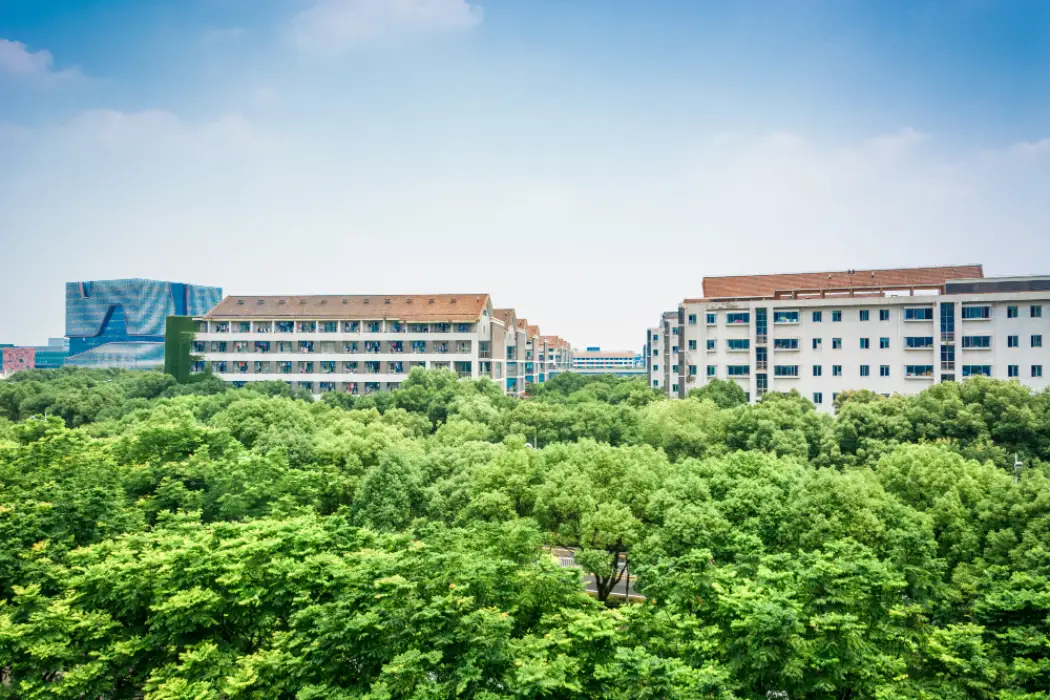
Campus: Spread over 188 acres in Manipal, Karnataka, featuring 10 academic buildings and 26 residential hostel blocks.
Academic Strength: Over 18 academic departments offering B.Tech, M.Tech, and PhD programs with a faculty count of 600+.
Infrastructure: Includes the Innovation Centre (MUTBI), Marena Sports Complex, central libraries, and state-of-the-art labs like the AICTE IDEA Lab.
Placement & Research: Strong industry ties with top recruiters like Microsoft, Goldman Sachs, and Deloitte; research is supported by agencies like DST, CSIR, and AICTE.
The Manipal Institute of Technology (MIT) offers a comprehensive academic curriculum designed to foster technical expertise and professional growth. The university utilizes a research-led teaching style that integrates theoretical concepts with practical application, ensuring students are prepared for complex industrial challenges. This approach is supported by modern laboratory facilities and a faculty committed to innovation across diverse engineering and technology domains.
A multidisciplinary learning approach is central to the institute's academic philosophy, allowing students to explore intersections between traditional engineering and emerging fields like Artificial Intelligence and Data Science. By offering a wide range of elective subjects and collaborative projects, the university encourages students to develop a versatile skill set. This educational framework aims to produce graduates who possess both specialized knowledge and a broad understanding of global technological trends.
| Course | Specializations | Eligibility |
| B.Tech | Computer Science, Artificial Intelligence & Machine Learning, Mechanical, Civil, Electrical & Electronics, Electronics & Communication, Data Science, Mechatronics, Aeronautical, Chemical, Automobile, Biotechnology, Biomedical, Industrial & Production, Information Technology, Instrumentation & Control, Cyber Security, Computer & Communication, Electronics & Instrumentation | 10+2 |
| M.Tech | Computer Science, Structural Engineering, VLSI Design, Digital Electronics & Communication, Manufacturing Engineering, Power Electronic & Drives, Aerospace Engineering, Biotechnology, Biomedical Engineering, Chemical Engineering, Computer Networking & Engineering, Construction Engineering & Management, Control Systems, Data Science, Energy Systems & Management, Engineering Management, Environmental Engineering, Industrial Automation & Robotics, Industrial Design & Manufacturing, Microelectronics, Network Engineering, Software Engineering, Thermal Process Engineering | Graduation |
| MCA | Computer Applications | Graduation |
| Ph.D | Engineering, Sciences, Humanities, Management | Post Graduation |
Aeronautical & Automobile Engineering: Focuses on providing core competency in the design and analysis of aircraft, spacecraft, and automotive systems through a blend of theoretical and practical learning.
Biomedical Engineering: Combines engineering principles with medical sciences to design and develop equipment and devices for healthcare and clinical research.
Biotechnology: Emphasizes the application of biological systems and organisms to technical and industrial processes, focusing on research-led innovation in life sciences.
Chemical Engineering: Dedicated to the study of chemical processes, plant design, and the transformation of raw materials into useful products through sustainable engineering.
Civil Engineering: Focuses on the planning, design, and construction of physical and naturally built environments, including infrastructure like bridges, roads, and water systems.
Computer Science & Engineering: Provides a strong foundation in hardware and software systems, programming, and advanced computing technologies to meet global industrial needs.
Computer Applications: Focuses on the development of application software and the study of computer systems to solve complex business and technical problems.
Data Science & Computer Communications: Specializes in the analysis of large data sets, statistical modeling, and the engineering of robust communication networks.
Electrical & Electronics Engineering: Centers on the study of electricity, electronics, and electromagnetism to design power systems, electrical machines, and control circuits.
Electronics & Communication Engineering: Dedicated to the development of electronic devices, circuits, and communication equipment for modern telecommunications and signal processing.
Electronics & Instrumentation Engineering: Focuses on the principle and operation of measuring instruments and the design of automation systems for industrial processes.
Humanities & Management: Provides holistic education by integrating social sciences, language studies, and management principles into the engineering curriculum.
Information & Communication Technology: Focuses on the convergence of computing and communication technologies to manage information and develop digital solutions.
Instrumentation & Control Engineering: Emphasizes the design and maintenance of automated systems and control mechanisms used in complex industrial environments.
Mathematics: Provides the essential mathematical framework and analytical tools required for engineering research, modeling, and problem-solving.
Mechanical & Industrial Engineering: Focuses on the design, manufacturing, and maintenance of mechanical systems and the optimization of industrial processes.
Mechatronics: Integrates mechanical, electronic, and computer engineering to design smart systems and advanced robotics for automated manufacturing.
Media Technology: Specializes in the engineering aspects of printing, packaging, and digital media production through a multidisciplinary approach.
Physics: Focuses on fundamental physical principles and their applications in material science, nanotechnology, and engineering research.
Chemistry: Dedicated to the study of chemical sciences and their application in developing new materials and solving engineering challenges.
Manipal Institute of Technology maintains a strong commitment to professional development and industry integration. The institute utilizes a dedicated placement cell that acts as a bridge between academia and the corporate world, organizing various training sessions to enhance student employability. Their consistent reputation with top-tier recruiters ensures that graduates are well-prepared for technical and leadership roles across diverse global sectors and industries.
Placement Percentage: 92.9%
Average Package: 12.59 LPA
Highest Package: 54.75 LPA
Manipal Institute of Technology (MIT) consistently maintains a high standing among India's premier engineering institutions, recognized for its rigorous academic curriculum and vibrant research ecosystem. As a constituent unit of the Manipal Academy of Higher Education (MAHE), it benefits from a legacy of excellence and a strong reputation for producing industry-ready graduates. The institute's commitment to research and innovation has earned it significant accolades from major national ranking agencies.
Key Details:
NIRF Ranking: Ranked #59 out of 300 in the "Engineering Category" for 2025.
NAAC Accreditation: Awarded an "A++" grade as part of MAHE.
Institution Status: Part of the Manipal Academy of Higher Education, which is recognized as an "Institution of Eminence" (IoE) by the Government of India.
Other Recognitions: Ranked #3 in India by The Times of India (2025) and #19 in the Engineering category by India Today (2025).
Academic: 4/5
Faculty: 4/5
Infrastructure: 4/5
Accommodation: 4/5
Social Life: 4/5
Placement: 4/5
The university emphasizes providing financial assistance to ensure that deserving students can pursue their education regardless of economic constraints. By offering various merit-based and need-based awards, the institution aims to recognize academic excellence while supporting students from diverse financial backgrounds to foster an inclusive and competitive learning environment.
Scholarship for Academy of General Education Students (SAGES): This program is designed for students who have studied in Academy of General Education (AGE) institutions, offering specific fee concessions based on their academic records.
Academy of General Education (AGE) Scholarship: This award is provided to students who have completed their schooling or junior college at an AGE-managed institution, providing financial relief through tuition fee waivers.
Scholarship for Konkani Speaking Students: This scholarship is aimed at supporting students belonging to the Konkani-speaking community, providing tuition fee waivers for various undergraduate and postgraduate programs.
Merit Scholarship for International Students: This program is for international applicants, where the scholarship amount is determined by the candidate’s performance in the qualifying examination.
Scholarship for Children of MAHE Alumni: This award is available to the children of MAHE alumni who have successfully completed their degrees from the university, offering a percentage-based tuition fee waiver.
Scholarship for Differently Abled Students: This scholarship provides financial support and fee concessions to students with physical disabilities to encourage their participation in higher education.
ITC Scholarship: This scholarship is specifically for students pursuing a Bachelor of Hotel Management (BHM) at the Manipal institution, supported by the ITC group to cover a portion of the tuition fees.
The faculty at Manipal Institute of Technology (MIT) comprises highly qualified professionals dedicated to academic excellence and innovative research. Many faculty members hold PhDs or are currently pursuing advanced degrees, bringing a wealth of expertise from various technical and scientific domains. They play a dual role by providing student-centric teaching while actively engaging in significant research and publication activities, thereby ensuring that students receive an education that is both theoretically sound and practically relevant to modern industry needs.
Faculty Strength: Approximately 20% of the faculty members are PhD holders, with many others pursuing doctoral studies.
Research Focus: Major research initiatives are centered on STEM areas including Cyber Physical Systems, IOT, Robotics, Aeronautical Engineering, and Biotechnology.
Global Background: The faculty includes seasoned experts with extensive industry backgrounds, such as experience building cyber systems for international companies and involvement in international-level technical projects.
Student-Faculty Ratio: The ratio is generally favorable, typically ranging from 1:8 to 1:15, allowing for personalized attention and mentorship.
Dr. (Cdr) Anil Rana - Department of Aeronautical & Automobile Engineering: Professor with extensive leadership and technical expertise in aviation and automotive systems.
Dr. Balaji S - Department of Biotechnology: Additional Professor & HOD specializing in advanced biotechnological research and life sciences.
Mr. Dhirendra Thakur - Department of Cyber Physical Systems: Recognized for his expertise in building cyber systems for international companies and practical application development.
Professor Vinayak Desai - Department of Mechanical & Industrial Engineering: Highly regarded for his research and teaching in building robust mechanical systems and industrial automation.
Dr. Krishna Sir - Department of Cyber Security: Focuses on app development skills and advanced cybersecurity infrastructure.
Room Specifications: Single, double, and triple sharing rooms. Available in AC and Non-AC categories with options for attached or common bathrooms.
Safety Features: 24/7 security, CCTV surveillance, and resident wardens.
Utility Services: Wi-Fi, laundry services, solar water heating, and water purifiers. On-campus facilities include ATMs, a general store, and a library.
Building Features: Power backup, common rooms, TV lounges, reading rooms, and elevators in multi-storey blocks.
Visual Identification:
Student Plaza
Marena Sports Complex
Central Library
Innovation Centre
Food Court (FC1 and FC2)
Academic Blocks
Residential Hostel Blocks (Boys and Girls)
The Manipal Institute of Technology (MIT) follows a multi-tiered fee structure that varies based on the specific branch of engineering and the level of study. For undergraduate programs like B.Tech, fees are generally divided into the first-year installment and subsequent annual installments. The institution also accounts for additional costs such as registration fees and caution deposits, which are typically paid at the commencement of the program.
For postgraduate and doctoral studies, the fee structure is tailored to the specialization and duration of the course. Programs like M.Tech and MCA involve tuition fees that cover academic resources and laboratory access. The university provides detailed breakdowns for various categories, including domestic and international student cohorts, ensuring transparency in financial requirements. All fee payments are processed through the university’s centralized system to facilitate streamlined academic administration.
| Course | Specializations | Fees |
| B.Tech | Computer Science, AI & Machine Learning, Data Science, Cyber Security, Information Technology, Computer & Communication | 19.34 Lakhs |
| B.Tech | Electronics & Communication, Electronics & Instrumentation, Electrical & Electronics | 18.06 Lakhs |
| B.Tech | Mechanical, Mechatronics, Aeronautical, Automobile, Industrial & Production | 16.16 Lakhs |
| B.Tech | Civil, Chemical, Biotechnology, Biomedical | 13.10 Lakhs |
| M.Tech | Computer Science, VLSI Design, Data Science, Structural Engineering, Software Engineering | 4.26 Lakhs |
| MCA | Computer Applications | 3.84 Lakhs |
| Ph.D | Engineering, Sciences, Humanities | 62,000 (First Year) |
The Manipal Institute of Technology (MIT) determines admissions primarily through the Manipal Entrance Test (MET). Cutoffs are released in the form of opening and closing ranks after each round of counseling. These ranks vary significantly across branches, with high-demand fields like Computer Science and Artificial Intelligence requiring significantly lower ranks compared to traditional engineering disciplines. The competitive nature of these cutoffs reflects the popularity of the specialization and the number of available seats for that academic year.
In addition to the B.Tech program, the institute sets specific benchmarks for postgraduate admissions. M.Tech applicants are typically evaluated based on their GATE scores or the Manipal Entrance Test results. For programs like MCA, the selection is based on merit in the previous qualifying examination or university-specific entrance tests. The cutoff trends serve as a critical guide for prospective students to gauge their chances of securing admission into their preferred technical stream.
| Course | Specializations | Cutoff (General Category - Round 1) |
| B.Tech | Computer Science and Engineering | 1083 |
| B.Tech | AI & Machine Learning | 1572 |
| B.Tech | Computer & Communication Engineering | 3169 |
| B.Tech | Data Science and Engineering | 3855 |
| B.Tech | Information Technology | 4454 |
| B.Tech | Electronics & Communication Engineering | 8459 |
| B.Tech | Electrical and Electronics Engineering | 18515 |
| B.Tech | Mechatronics Engineering | 24391 |
| B.Tech | Mechanical Engineering | 41258 |
| B.Tech | Aeronautical Engineering | 24040 |
| B.Tech | Automobile Engineering | 44439 |
| B.Tech | Chemical Engineering | 46844 |
| B.Tech | Biomedical Engineering | 46524 |
| B.Tech | Biotechnology | 37043 |
| B.Tech | Civil Engineering | 47313 |









![NEET Re-Exam Dates 2026 [Updated]](https://www.collegedakhla.com/uploads/blogs/NEET_Re-Exam_Dates_2026_Updated.png)
![B.Tech Fees in Private Colleges - [Updated List]](https://www.collegedakhla.com/uploads/blogs/B.Tech_Fees_in_Private_Colleges.png)
![Top 5 Universities in India - [Updated List 2026]](https://www.collegedakhla.com/uploads/blogs/Top_5_Universities_in_India.png)
















1.webp)





Total Reviews (0)
No reviews found.