Top 10 Career Options After BCom: Jobs and Scope
September 07, 2026
(Reviews)
Info
Courses & Fees
Admission
CutOff
Placement
Reviews
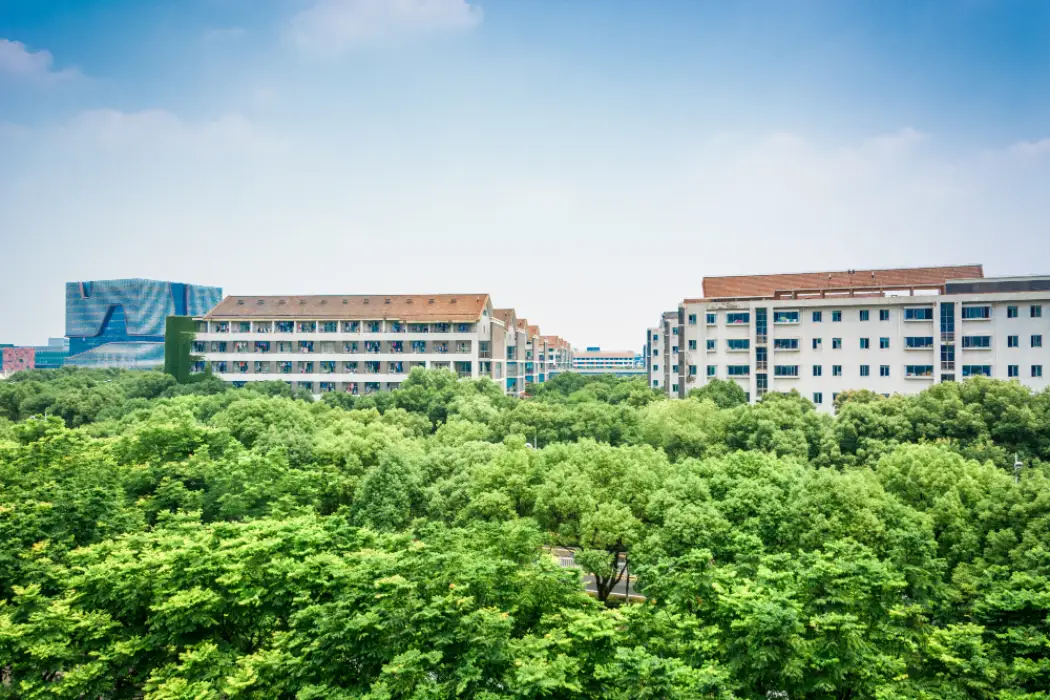
Pt. Jawahar Lal Nehru Government College, Faridabad, is a government higher education institution located in Sector 16A, Faridabad, Haryana. Established in 1971, the college has served students pursuing undergraduate and postgraduate education in Arts, Commerce, Science, Management and Computer Applications. It is affiliated with Maharshi Dayanand University (MDU), Rohtak, and follows the academic and examination framework applicable to its affiliated programmes.
College Overview
| Particular | Details |
|---|---|
| Institution Name | Pt. Jawahar Lal Nehru Government College |
| Common Name | JLN Government College, Faridabad |
| Institution Type | Government College |
| Established | 1971 |
| Location | Sector 16A, Faridabad, Haryana |
| PIN Code | 121002 |
| Affiliated University | Maharshi Dayanand University, Rohtak |
| Academic Levels | Undergraduate and Postgraduate |
| Main Study Areas | Arts, Commerce, Science, Management and Computer Applications |
| Admission Mode | Centralised online admission and merit-based selection |
| Campus | Urban college campus in Faridabad |
History and Educational Role
Established in 1971, the college has a long-standing presence in Faridabad's higher education landscape. Its government-college status makes it an option for students looking for recognised degree programmes without the fee levels commonly associated with many private institutions. The college caters to students from different academic backgrounds, including those interested in humanities, business and commerce, scientific subjects, computer applications and management.
The institution's academic offerings include both general degree programmes and specialised subject combinations. Students who want to pursue a broad undergraduate degree can consider programmes such as BA, B.Com or B.Sc, depending on their Class 12 subjects and academic interests. Students interested in management-oriented study can explore BBA, while BCA is relevant for learners aiming to develop a foundation in computer applications and information technology.
At the postgraduate level, students can explore MA programmes in selected humanities and social science subjects, M.Com for advanced commerce education, M.Sc for specialised scientific study, and PGDCA for further learning in computer applications. Programme availability should be checked for the relevant academic session because course structures, subject combinations and seat numbers may change.
Academic Environment and Learning Opportunities
The college's programme mix allows students to choose a path according to their previous studies and future plans. Arts and humanities students can develop subject knowledge, writing, research and analytical skills through BA and MA programmes. Commerce students can build a foundation in accounting, business, finance and related fields through B.Com and M.Com. Science students can pursue subject-based learning through B.Sc and M.Sc programmes, while BBA and BCA provide pathways towards management and computing-related careers.
A degree programme is only one part of career preparation. Students can strengthen their profile by participating in seminars, academic activities, sports, cultural events, internships, projects and skill-development opportunities when these are available. Those preparing for government recruitment examinations or postgraduate entrance tests can also use their undergraduate studies to develop subject knowledge, reading ability, quantitative aptitude and communication skills.
Campus and Student Facilities
The college is situated in Sector 16A, Faridabad, within the city's established urban area. Students should confirm the availability and current operating arrangements of specific facilities, including laboratories, library services, sports areas, computer resources, student-support services and activity spaces, before relying on them for a particular programme.
The institution does not appear to provide on-campus hostel accommodation in the currently available course and campus information. Students relocating from outside Faridabad should therefore plan for private accommodation, daily commuting or other suitable living arrangements. Accommodation costs will depend on the locality, room type, transport requirements and food arrangements.
Who Can Consider This College?
Students looking for a government college in Faridabad for undergraduate or postgraduate study.
Class 12 graduates interested in Arts, Commerce, Science, Management or Computer Applications.
Students who prefer comparatively economical degree options and want to compare course-specific fees before applying.
Graduates seeking further study through MA, M.Com, M.Sc or PGDCA, subject to programme eligibility.
Learners preparing for higher studies, competitive examinations or entry-level employment alongside their degree.
Students who can manage their own transport or accommodation if they live outside the immediate college area.
Affiliation and Degree Recognition
The college is affiliated with Maharshi Dayanand University, Rohtak. Students should check the applicable university regulations for course duration, examination patterns, credit requirements, practical work, internal assessment and degree completion. These details can differ across programmes and may also change under revised curricula.
Location and Contact
The college is located in Sector 16A, Faridabad, Haryana – 121002. The publicly listed contact number is 0129-2226529. Applicants should use the college's current contact and admission information to confirm programme availability, document requirements, fee payment procedures and any notices affecting their admission year.
0 Reviews
Very Good
Pt. Jawahar Lal Nehru Government College, Faridabad, offers undergraduate and postgraduate programmes across Arts, Commerce, Science, Management and Computer Applications. The available course mix includes general degrees, honours or major-based subject options, specialised science programmes and postgraduate qualifications. The fees listed below are published course-fee figures for reference and may not reflect every revision or additional charge applicable in the 2026–27 academic session.
Undergraduate Courses and Fees
| Course | Typical Duration | Published Total Fee (Approx.) | General Eligibility |
|---|---|---|---|
| Bachelor of Arts (BA) | 3 years | ₹16,740 | Class 12 pass from a recognised board |
| BA Honours / Major | 3 years | Around ₹17,010 | Class 12 pass; subject rules apply |
| BA Journalism and Mass Communication | 3 years | Around ₹17,010 | Class 12 pass, subject to current rules |
| Bachelor of Commerce (B.Com) | 3 years | Around ₹15,708 | Class 12 pass; commerce-related background may be relevant |
| B.Com Honours | 3 years | Around ₹16,956 | Class 12 pass; programme-specific conditions apply |
| Bachelor of Business Administration (BBA) | 3 years | Around ₹25,830 | Class 12 pass |
| Bachelor of Computer Applications (BCA) | 3 years | Around ₹28,470 | Class 12 with the prescribed subjects, including Mathematics where required |
| B.Sc Biotechnology | 3 years | Around ₹17,064 | Class 12 Science with relevant subjects |
| B.Sc Life Sciences | 3 years | Around ₹22,320 | Class 12 with relevant science subjects |
| B.Sc Physical Sciences | 3 years | Around ₹22,320 | Class 12 with relevant science subjects |
| B.Sc Chemistry-focused honours / major option | 3 years | Around ₹17,064 | Class 12 Science with relevant subjects |
The exact fee may vary by programme, subject combination, admission category, university charges and the applicable academic year's fee notification. These amounts are intended as a guide to published programme totals rather than a guarantee of the final payable amount.
Postgraduate Courses and Fees
| Course | Typical Duration | Published Total Fee (Approx.) | General Eligibility |
|---|---|---|---|
| MA Economics | 2 years | Around ₹13,740 | Graduation with the required subject/background |
| MA English | 2 years | Around ₹13,740 | Graduation, subject to university rules |
| MA Geography | 2 years | Around ₹13,740 | Graduation, subject to programme requirements |
| MA Hindi | 2 years | Around ₹13,740 | Graduation, subject to university rules |
| MA History | 2 years | Around ₹13,740 | Graduation, subject to university rules |
| MA Psychology | 2 years | Around ₹13,740 | Graduation, subject to programme requirements |
| Master of Commerce (M.Com) | 2 years | Around ₹13,644 | B.Com or another accepted qualification |
| M.Sc Chemistry | 2 years | Around ₹18,420 | B.Sc with the required chemistry background |
| M.Sc Computer Science | 2 years | Around ₹18,420 | Relevant bachelor's degree and subject prerequisites |
| M.Sc Physics | 2 years | Around ₹18,420 | B.Sc with the required physics background |
| M.Sc Mathematics | 2 years | Around ₹13,644 | Bachelor's degree with the required mathematics background |
| PG Diploma in Computer Applications (PGDCA) | 1 year | Around ₹9,210 | Graduation, subject to current eligibility rules |
Understanding the Fee Structure
Government colleges generally follow the fee structure notified for the relevant course and academic year. The total payable amount may include tuition and other prescribed components, and the exact breakdown can differ by programme. Applicants should check the latest fee notice and admission portal before paying.
Students should distinguish between the full-course fee, the amount payable at the time of admission, and any recurring annual or semester charges. A published total fee does not necessarily mean the entire amount is payable in a single instalment. Examination fees, university charges, practical-related charges or other notified components may apply according to the current rules.
Scholarships and Financial Assistance
Eligible students may be able to apply for government scholarships or fee-related assistance, depending on their category, family income, domicile, academic performance and the conditions of the relevant scheme. Availability and award amounts are not identical for every student.
Students should check:
Haryana government scholarship schemes applicable to higher education.
Post-matric scholarship eligibility for eligible reserved-category students.
Income-based assistance or fee concessions, where applicable.
Merit-linked awards announced for the relevant academic session.
Required documents, including income, caste or category, domicile and bank details where relevant.
Scholarship approval is subject to scheme rules, document verification and the applicable application deadline. Students should not assume that a scholarship will automatically reduce their admission payment.
Hostel and Living Expenses
On-campus hostel accommodation is not listed as an available facility in the current programme information. Students coming from outside Faridabad should budget separately for rented accommodation, meals, transport, books, stationery, internet and other personal expenses. These costs vary significantly according to the area and type of accommodation selected.
How to Confirm the Final Fee
Before completing admission, students should confirm the exact programme name, course duration, fee total, payment schedule and any additional university charges. They should also verify whether a course is available in the desired academic session and whether its subject combination matches their Class 12 or graduation background. The figures in the tables provide a practical comparison across programmes, but the current fee notice takes precedence when calculating the amount payable.
Pt. Jawahar Lal Nehru Government College, Faridabad, follows a centralised online admission process for its regular undergraduate and postgraduate programmes. Admissions are generally merit-based, with eligibility determined by the programme selected, the candidate's previous academic qualification and the applicable university and state higher-education rules. The college does not generally use a separate college-level entrance examination for the listed BA, B.Com, B.Sc, BBA, BCA and conventional postgraduate programmes.
Admission Dates for the 2026–27 Session
| Admission Event | Published 2026 Schedule |
|---|---|
| UG online registration began | 7 May 2026 |
| Initial UG registration deadline | Extended during the admission cycle |
| Later UG counselling and registration opportunities | Continued through revised rounds |
| Final extended UG deadline announced by Haryana | 15 September 2026 |
| PG registration deadline | 21 August 2026 |
| 2026–27 admission status | Closed |
The dates above relate to the 2026–27 cycle and should not be used as the schedule for the next admission year. The next cycle's dates should be entered only after the relevant official notification is released. Applicants interested in future admissions should prepare their documents in advance and monitor the centralised admission portal for the next session.

Eligibility for Undergraduate Courses
Eligibility depends on the selected programme and the subjects studied in Class 12.
BA: Applicants generally need to have passed Class 12 from a recognised board. Subject combinations and any minimum-mark conditions must be checked under the applicable rules.
BA Honours / Major: Applicants must satisfy the general Class 12 requirement and any subject-specific conditions associated with the chosen major.
BA Journalism and Mass Communication: Class 12 qualification is generally required, subject to the programme's current eligibility conditions.
B.Com: Applicants must have completed Class 12. The accepted stream and subject requirements should be checked in the current admission rules.
B.Com Honours: Class 12 qualification is required, with programme-specific eligibility and merit rules applying.
BBA: Applicants generally need to pass Class 12 from a recognised board.
BCA: Applicants must satisfy the programme's subject requirements. Mathematics may be required under the applicable rules, so candidates should confirm the current eligibility before applying.
B.Sc Biotechnology and Life Sciences: Applicants generally need a Class 12 science background with the relevant subjects.
B.Sc Physical Sciences and Chemistry-related options: Applicants generally need the prescribed science subjects, with combinations determined by the programme.
Meeting the minimum eligibility requirement permits a candidate to apply but does not guarantee admission. Selection depends on merit, available seats, category rules, preferences and the counselling round.
Eligibility for Postgraduate Courses
Candidates applying for MA, M.Com, M.Sc or PGDCA must hold the relevant undergraduate qualification. MA programmes may require a specific subject background or follow university-defined admission rules. M.Com applicants generally need B.Com or another accepted qualification. M.Sc candidates must have studied the relevant science subject or satisfy the prescribed combination. PGDCA eligibility generally requires graduation, subject to the current programme conditions.
Candidates should review the course-specific eligibility rather than assuming that every bachelor's degree qualifies for every postgraduate programme.
Online Application Procedure
The usual application process includes the following stages:
Visit the Haryana Higher Education centralised admission portal when applications open.
Register using the requested personal and contact information.
Enter Class 12 or graduation details, as applicable.
Select the preferred college and eligible programme according to the portal's instructions.
Upload the required documents and photographs in the prescribed format.
Review the application carefully and correct errors before the deadline.
Submit the form and pay the applicable registration or application charge, if required.
Track document verification, eligibility status, merit lists and counselling announcements.
If selected, complete fee payment within the specified period and retain the payment confirmation.
Follow the college's instructions for reporting, document verification and commencement of classes.
Documents Commonly Required
Applicants should prepare the following documents as applicable:
Class 10 certificate or date-of-birth proof.
Class 12 marksheet and passing certificate for UG admission.
Graduation marksheets and degree/provisional certificate for PG admission.
Recent passport-size photograph and signature.
Aadhaar or another accepted identity document, where required.
Haryana domicile certificate, if applicable to the claim being made.
Caste/category certificate, if seeking a reserved-category benefit.
Income certificate, where required for a scholarship or fee concession.
Migration or transfer certificate, if applicable.
Any additional document requested by the portal, college or university.
The exact document list can vary according to the candidate's educational background, category and programme. Uploading a document does not automatically establish eligibility; the college or relevant authority may verify the information.
Merit Lists, Counselling and Seat Confirmation
Merit-based selection normally involves publication of applicant or merit lists, document verification, seat allocation and fee payment. Where more than one round is conducted, candidates should track every relevant notice because deadlines and vacant-seat procedures may differ from one round to another.
A candidate whose name appears on a merit list must still complete the required admission formalities within the specified period. Failure to pay the fee or submit the required documents by the deadline can result in the seat being offered to another eligible applicant. Candidates should keep copies of their submitted application, uploaded documents, merit-list status and payment receipt.
Reservation and Scholarships
Reservation benefits are subject to the applicable Haryana government and university rules. Candidates claiming a category-based benefit should provide valid documentation in the format and within the deadline specified for that session. Scholarship applications may require a separate submission and are not necessarily processed automatically as part of college admission.
Important Planning Advice for Applicants
Since the 2026–27 cycle has closed, students preparing for the next session should keep their academic records ready, identify the programmes that match their subjects and check the next admission notification for exact dates. Do not reuse the 2026 schedule as a confirmed date for the following year. The final eligibility, seat matrix, application charges, merit rules and reporting instructions are those notified for the relevant academic session.
Pt. Jawahar Lal Nehru Government College, Faridabad, generally admits students to its regular undergraduate and postgraduate programmes through merit-based selection. The cut-off is not a single fixed score applicable to the entire college. It can differ by course, subject combination, category, number of available seats, applicant demand, academic performance and counselling round.
For undergraduate programmes, merit is generally calculated using the qualifying Class 12 examination and the rules applicable to the selected course. Postgraduate merit is based on the qualifying bachelor's degree and programme-specific eligibility. Candidates should check the current admission notification for the precise calculation method and any subject-wise requirements.
Course-Wise Cut-off Overview
| Course | Qualifying Examination | Basis of Selection | Cut-off Information |
|---|---|---|---|
| BA | Class 12 | Academic merit | Varies by merit list, category and round |
| BA Honours / Major | Class 12 | Academic merit and subject eligibility | Varies by chosen subject and available seats |
| BA Journalism and Mass Communication | Class 12 | Academic merit | Depends on programme intake and applicant merit |
| B.Com | Class 12 | Academic merit | Varies by category and counselling round |
| B.Com Honours | Class 12 | Academic merit and programme eligibility | Separate merit position may apply |
| BBA | Class 12 | Academic merit | Depends on the applicant pool and available seats |
| BCA | Class 12 | Academic merit and prescribed subject eligibility | Subject requirements must be satisfied |
| B.Sc Biotechnology | Class 12 Science | Academic merit and relevant subjects | Depends on science-subject eligibility and merit |
| B.Sc Life Sciences | Class 12 Science | Academic merit | Varies with applicant demand and seat availability |
| B.Sc Physical Sciences | Class 12 Science | Academic merit and prescribed subjects | Varies by merit list and category |
| MA | Bachelor's degree | Graduation merit and subject rules | Depends on the chosen subject and intake |
| M.Com | Bachelor's degree | Graduation merit and programme eligibility | Varies by applicant merit |
| M.Sc | Bachelor's degree with relevant subjects | Graduation merit and subject prerequisites | Separate subject-wise criteria may apply |
| PGDCA | Bachelor's degree | Academic merit and eligibility | Depends on the current admission rules |
Understanding the Merit List
A cut-off may be published as a percentage, qualifying-mark requirement, merit position or list of selected candidates, depending on the admission process. Applicants should not treat a minimum eligibility percentage as the final admission cut-off. A candidate can meet the minimum requirement but still fail to secure a seat if the number of eligible applicants exceeds the available intake.
For example, the merit position for B.Com may differ from that for BBA because the applicant pool, number of seats and academic preferences are different. Similarly, BA Honours or major-based programmes can have different merit outcomes according to subject choice and eligibility rules. Science courses can also have different requirements depending on the subjects studied in Class 12.
Factors Affecting the Cut-off
Course demand: Programmes receiving more eligible applications may have more competitive merit lists.
Available seats: The number of seats offered for a course can influence the closing merit position.
Category and reservation: Separate category-wise rules and lists may apply under the relevant policy.
Academic marks: The marks considered and the calculation method depend on the applicable admission rules.
Subject eligibility: Candidates must meet the subject requirements of the selected programme.
Counselling round: Later rounds may fill vacant seats, and their closing merit can differ from earlier rounds.
Applicant preferences: The number of candidates selecting a particular programme can influence the final allocation.
Document verification: Incomplete or invalid documentation can affect eligibility even when academic marks are sufficient.
How to Check the Relevant Cut-off
Applicants should review the merit list for their exact programme and admission session. They should also identify the relevant category, counselling round and selection status before comparing their marks with the published list. For postgraduate admission, the relevant bachelor's degree and subject eligibility should be checked alongside the merit criteria.
The college's admission information and the centralised Haryana higher-education portal are the appropriate places to check current merit lists and vacant-seat counselling notices. Students should retain the date and round of any list they use because a first-round cut-off cannot automatically be treated as the final closing cut-off.
Cut-off Guidance for 2026–27
The 2026–27 admission cycle has concluded. A reliable course-wise closing percentage for every programme and category is not established by the general admission summaries available here, so unsupported numerical cut-offs should not be published as actual college figures. The tables above provide the course-wise selection framework rather than fabricated percentages.
Students preparing for the next admission session should use the latest merit lists when released. Comparing their marks with previous lists can help them understand the level of competition, but past merit outcomes are not a guarantee of future admission. The next session may have different seat availability, applicants, eligibility rules and counselling rounds.
Pt. Jawahar Lal Nehru Government College, Faridabad, offers undergraduate and postgraduate programmes that can prepare students for further education, competitive examinations and employment across several fields. Its academic areas include Arts, Commerce, Science, Management and Computer Applications. Career outcomes depend on the selected programme, the student's skills, academic performance, practical experience and the opportunities available during the recruitment cycle.
Students should evaluate placements by looking at the number of students placed, the median salary, the highest salary where reliably reported, the type of employers recruiting and the number of graduates choosing further studies. The highest package alone does not indicate the outcome experienced by a typical student.
Programme-Wise Career Pathways
| Programme | Potential Career Areas | Useful Skills to Develop |
|---|---|---|
| BA | Administration, education-related work, content, research assistance and competitive-exam preparation | Communication, writing, research and general awareness |
| BA Economics | Research assistance, business analysis support, banking preparation and economic-data work | Statistics, spreadsheets, economic analysis and report writing |
| BA English | Content writing, editing, communication, teaching pathways and media-related roles | Writing, editing, presentation and language proficiency |
| BA Geography | Research support, mapping-related work and further study in geography or planning | Data interpretation, mapping tools and research |
| BA History | Education-related pathways, research support, heritage-related work and competitive exams | Research, analytical writing and historical interpretation |
| BA Psychology | Psychology-related support roles, human resources and further study | Communication, research methods and ethical awareness |
| BA Journalism and Mass Communication | Media support, content production, reporting assistance and digital communication | Writing, interviewing, editing and digital media tools |
| B.Com | Accounts assistance, finance operations, taxation support and banking-related work | Accounting, spreadsheets, financial literacy and taxation basics |
| B.Com Honours | Accounts, audit support, commerce operations and further professional study | Advanced accounting, analytical skills and business communication |
| BBA | Sales, marketing support, operations, customer relations and administration | Presentation, teamwork, Excel and business communication |
| BCA | IT support, software-testing assistance, web development and application support | Programming, databases, debugging and project development |
| B.Sc Biotechnology | Laboratory support and further study in biotechnology or life sciences | Laboratory practice, documentation and scientific methods |
| B.Sc Life Sciences | Laboratory-related support, research assistance and further scientific education | Biology fundamentals, data recording and practical skills |
| B.Sc Physical Sciences | Technical support, laboratory work, tutoring pathways and further study | Mathematics, scientific reasoning and laboratory practice |
| MA | Subject-specific research, education-related pathways and competitive exams | Research, writing, analysis and subject knowledge |
| M.Com | Accounts, taxation support, finance operations and further professional study | Financial reporting, accounting software and analytical ability |
| M.Sc | Laboratory-related work, research assistance, technical roles and further research | Practical methods, data analysis and specialised subject knowledge |
| PGDCA | Computer operations, office IT support, application support and further IT training | Computer applications, databases and office software |
These are potential career pathways associated with the qualifications, not a guarantee that the college directly recruits students into every listed role.
Placement Figures and Reported Outcomes
The following figures are historical median-salary and placement counts reported for the college's graduate-outcome data. They should be read as past outcomes for the specified programme duration and year, not as a promise of salary for current students.
| Reporting Year | Programme Category | Students Placed | Median Salary |
|---|---|---|---|
| 2021–22 | 3-year UG programmes | 47 | ₹2.60 LPA |
| 2022–23 | 3-year UG programmes | 43 | ₹2.86 LPA |
| 2023–24 | 3-year UG programmes | 62 | ₹2.26 LPA |
| 2021–22 | 2-year PG programmes | 45 | ₹2.50 LPA |
| 2022–23 | 2-year PG programmes | 6 | ₹2.55 LPA |
| 2023–24 | 2-year PG programmes | 22 | ₹2.70 LPA |
LPA means lakh per annum. Median salary represents the middle value in a salary distribution; it is different from the highest package and should not be interpreted as the salary offered to every placed student. The reported totals also do not establish how many students applied for jobs, pursued higher education or chose another career path.
How Students Can Improve Their Employment Prospects
Students can strengthen their employability by combining their degree with practical skills and demonstrable work. Useful steps include:
Build digital skills: Learn spreadsheets, presentations, professional email, online collaboration and tools relevant to the chosen field.
Create a project portfolio: BCA students can develop software or web projects; commerce students can prepare accounting or financial-analysis exercises; humanities students can create writing, research or content samples.
Gain practical exposure: Apply for internships, project-based assignments, volunteering opportunities and relevant part-time experience.
Improve communication: Practise interviews, presentations, group discussions, written communication and professional conduct.
Prepare for competitive examinations: Students targeting government or postgraduate examinations should plan their preparation alongside regular academic work.
Develop subject-specific skills: Science students can focus on laboratory practice and research methods, while management students can develop teamwork, analysis, sales and business-presentation skills.
Maintain an updated résumé: Include projects, internships, certifications, relevant coursework and measurable achievements.
Use campus opportunities: Participate in career activities, seminars, workshops and placement-related events when offered.
Career Planning by Course
Commerce students may consider accounting, taxation, finance operations, banking examinations and professional qualifications. BBA students can explore management, marketing, sales, customer relations and operations roles. BCA students should focus on programming fundamentals, databases, web development, testing and practical projects to demonstrate their abilities to employers.
Students pursuing BA or MA can explore content, communication, research assistance, education-related pathways and competitive examinations, depending on their subjects and further qualifications. Science students may pursue further study, laboratory-related roles or technical opportunities that match their specialisation and practical experience.
For students who plan to continue studying, postgraduate programmes, professional courses, specialised certifications or entrance examinations can provide additional pathways. The right option depends on the student's subject interests, academic record, career objective and available resources.
Highest Package and Placement Transparency
A reliable, programme-wise highest-package figure for the college should not be assumed from unconfirmed online claims. The historical median-salary figures above provide a more useful reference for understanding reported outcomes, but they are not the same as a current placement guarantee. Students should ask for the latest placement report, participating employer list, number of eligible and placed students, median salary and highest package separately before making a decision.
Overall Career Outlook
Pt. Jawahar Lal Nehru Government College can serve as a foundation for higher education, competitive-exam preparation and entry-level employment across a variety of disciplines. Students who actively build practical skills, complete projects, pursue relevant internships and prepare a clear career plan can make their degree more useful in the employment market. Actual placement outcomes will vary according to the programme, employer requirements, student preparation and the opportunities available in a given year.
September 07, 2026
September 04, 2026
September 03, 2026
September 02, 2026
August 25, 2026
August 22, 2026
August 18, 2026
August 17, 2026
August 14, 2026
August 13, 2026
August 11, 2026
August 08, 2026
July 31, 2026
July 27, 2026
July 24, 2026
July 20, 2026
July 11, 2026
July 09, 2026
June 13, 2026
June 10, 2026
June 07, 2026
May 29, 2026
May 27, 2026
May 25, 2026
May 23, 2026
May 21, 2026
May 18, 2026
May 17, 2026
May 14, 2026
May 13, 2026
May 11, 2026
May 09, 2026
May 07, 2026
May 07, 2026
April 29, 2026
April 28, 2026
April 28, 2026
April 24, 2026
April 21, 2026
March 31, 2026
March 30, 2026
March 23, 2026
March 20, 2026
March 14, 2026
February 23, 2026
February 19, 2026
February 16, 2026
February 16, 2026
February 10, 2026
February 10, 2026
February 07, 2026
February 07, 2026
February 05, 2026
February 05, 2026
January 09, 2026
January 07, 2026
June 05, 2025
Brochure download will be available soon!
Get details and latest updates
Total Reviews (0)
No reviews found.